Worksheet: Butterfly Life Cycle
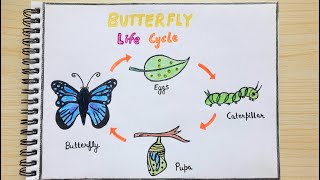
Understanding the butterfly life cycle is a fundamental concept in biology and a fascinating journey of transformation. This worksheet will guide you through the four stages of a butterfly's life: egg, larva (caterpillar), pupa (chrysalis), and adult. Each stage is crucial and contributes to the complete metamorphosis of a butterfly.
Stage 1: Egg
The butterfly life cycle begins with the egg. Female butterflies lay their eggs on the leaves of host plants, which are the plants that the caterpillars will eat. The number of eggs a female lays can vary greatly depending on the species. For example, some species lay only a few eggs, while others can lay hundreds.
- Egg Laying: Female butterflies use their ovipositor to lay eggs on the underside of leaves. The eggs are often laid in clusters.
- Egg Hatching: After a few days, the eggs hatch, and tiny caterpillars emerge. The time it takes for eggs to hatch can vary depending on the species and environmental conditions.
Stage 2: Larva (Caterpillar)
The second stage of the butterfly life cycle is the larva, commonly known as a caterpillar. Caterpillars are the feeding stage of the butterfly's life. They are voracious eaters and will consume a significant amount of leaves from their host plants.
- Feeding: Caterpillars have a set of specialized mouthparts that allow them to chew and digest their food. They will eat continuously, growing larger and larger with each meal.
- Growth: As caterpillars feed, they grow and undergo a process called molting, where they shed their exoskeleton to accommodate their growing size. This process repeats several times before the caterpillar is ready to enter the next stage of its life cycle.
- Resting: After several molting cycles, the caterpillar will stop feeding and enter a resting stage. During this time, it prepares for the next phase of its life cycle.
Stage 3: Pupa (Chrysalis)
The third stage of the butterfly life cycle is the pupa, commonly known as a chrysalis. This is a resting and transformation stage where the caterpillar undergoes a remarkable change to become a butterfly.
- Forming the Chrysalis: The caterpillar spins a cocoon or chrysalis around itself using silk. The chrysalis is typically attached to a leaf or other surface with silk threads.
- Metamorphosis: Inside the chrysalis, the caterpillar's body undergoes a series of changes. Its organs and tissues are reorganized and transformed into those of an adult butterfly. This process can take several days to weeks, depending on the species and environmental conditions.
- Emerging as an Adult: Once the metamorphosis is complete, the adult butterfly emerges from the chrysalis. The process of emerging can vary depending on the species, but it typically involves the butterfly breaking through the chrysalis and spreading its wings.
Stage 4: Adult
The final stage of the butterfly life cycle is the adult butterfly. Adult butterflies are the reproductive stage of the life cycle. They are responsible for mating and laying eggs to start the cycle anew.
- Mating: Adult butterflies are typically sexually dimorphic, meaning that males and females have different appearances. Males will often display behaviors to attract females, such as flying in specific patterns or producing pheromones.
- Laying Eggs: After mating, the female butterfly will begin to lay eggs on host plants. The number of eggs she lays can vary greatly depending