Why Are There So Many Earthquakes In Japan?
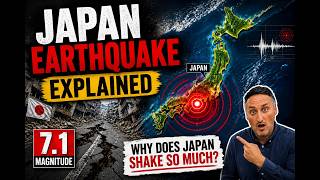
Japan is one of the most seismically active countries in the world. Residents and visitors alike often wonder why there are so many earthquakes in Japan compared to other regions. The answer lies deep beneath the Earth's surface, involving complex geological movements and the country's unique position on the global map.
The Role of Tectonic Plates
To understand why Japan experiences frequent seismic activity, one must look at the theory of plate tectonics. The Earth's outer shell, the lithosphere, is broken into several large and small tectonic plates that are constantly moving. Japan is situated at a volatile intersection where several of these plates meet.
Specifically, Japan sits near the junction of four major tectonic plates:
- The Pacific Plate: An oceanic plate moving westward.
- The Philippine Sea Plate: A smaller plate pushing against the southern islands.
- The Eurasian Plate: A massive continental plate.
- The North American Plate: Which influences the northern regions of Japan.
The interaction between these plates is the primary driver of seismic activity. Because these plates are constantly shifting, they do not glide smoothly past one another. Instead, they snag and lock, building up immense amounts of potential energy over time.
Understanding Subduction Zones
A critical geological process occurring around Japan is subduction. This happens when a denser oceanic plate (such as the Pacific Plate) slides beneath a lighter continental plate (such as the Eurasian Plate).
As the oceanic plate sinks into the Earth's mantle, it creates a subduction zone. This process is not seamless; the plates stick due to friction. When the accumulated stress finally exceeds the strength of the rocks, the plates suddenly slip, releasing a massive burst of energy in the form of seismic waves. This is what we experience as an earthquake.
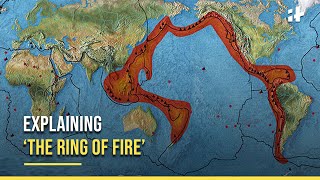
These subduction zones are also responsible for the creation of the "Ring of Fire," a horseshoe-shaped belt in the Pacific Ocean characterized by frequent earthquakes and volcanic eruptions. Japan is a prominent part of this belt, making it a hotspot for both tremors and volcanic activity.
The Impact of Shallow and Deep Earthquakes
Not all earthquakes in Japan are the same. Geologists categorize them based on their depth, which significantly affects their impact on the surface:
- Shallow Earthquakes: These occur close to the surface. While they may have lower magnitudes, they are often more destructive because the energy has less distance to travel before hitting populated areas.
- Deep Earthquakes: These occur hundreds of kilometers underground. While they can be incredibly powerful, the energy dissipates as it travels upward, often resulting in less surface damage.
The variety of plate interactions in Japan means the country experiences a mix of both, contributing to the high frequency of felt tremors.
The Risk of Tsunamis
Many of the most catastrophic earthquakes in Japan occur underwater. When a massive slip happens on the ocean floor—particularly in a subduction zone—it displaces a colossal volume of water. This displacement creates a series of waves known as a tsunami.
Because Japan is an archipelago with extensive coastlines, it is uniquely vulnerable to these events. The displacement of the seabed can send walls of water racing toward the shore, often arriving shortly after the initial shaking has stopped, compounding the disaster.
How Japan Adapts to Seismic Activity
Given that the geological reality of the region cannot be changed, Japan has become a global leader in earthquake engineering and disaster preparedness. The country employs several strategies to mitigate risk:
- Advanced Architecture: Many skyscrapers are built with "base isolation" systems—giant rubber pads or springs that absorb the shock of a quake, allowing the building to sway rather than snap.
- Early Warning Systems: Japan utilizes a sophisticated network of sensors that detect the initial, faster-moving P-waves, providing seconds to minutes of