Who Was The King Of Spain? Understanding the Spanish Monarchy
When asking who was the King of Spain, the answer depends entirely on the historical era in question. Spain has a long and complex monarchical history, evolving from various kingdoms into a unified global empire, and eventually into the modern constitutional monarchy that exists today. From the unification under the Catholic Monarchs to the current reign of King Felipe VI, the Spanish throne has been occupied by some of history's most influential figures.
The Current Monarch: King Felipe VI
Currently, the King of Spain is Felipe VI. He ascended to the throne on June 19, 2014, following the abdication of his father, King Juan Carlos I. Felipe VI represents the modern era of the Spanish monarchy, focusing on stability, institutional integrity, and the role of the crown as a symbol of national unity.
His reign has been characterized by efforts to modernize the monarchy and distance the institution from the scandals that plagued his father's final years. As a constitutional monarch, Felipe VI does not govern the country directly; instead, he serves as the Head of State, performing ceremonial duties and acting as a diplomatic representative for Spain on the global stage.
The House of Bourbon and the Transition to Democracy
The modern Spanish royal line belongs to the House of Bourbon. One of the most pivotal figures in recent history was King Juan Carlos I. After the death of dictator Francisco Franco in 1975, Juan Carlos I was reinstated as King, playing a crucial role in transitioning Spain from a military dictatorship to a parliamentary democracy.
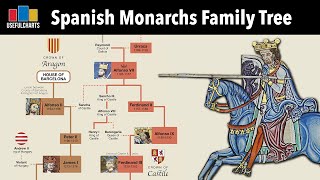
The lineage of the Spanish royals is famously intricate, featuring a complicated lineage that connects the Spanish crown to other European houses, including the British Royal Family and Queen Elizabeth II. These connections highlight the interconnected nature of European nobility, where marriages were often strategic tools for diplomacy and territorial expansion.
Historical Turning Points: From the Habsburgs to the Bourbons
To understand who held the throne in the past, one must look at the shift between the two most dominant dynasties: the Habsburgs and the Bourbons.
The Habsburg Era
For centuries, Spain was ruled by the House of Habsburg. This era saw Spain reach the height of its global power, controlling vast territories in the Americas and Europe. However, this period also ended in a biological crisis. Charles II was the final monarch of the Spanish Habsburg line. Due to generations of inbreeding within the family to keep power concentrated, Charles II suffered from severe physical and mental health issues and died without an heir in 1700.
The War of the Spanish Succession
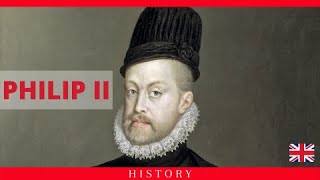
The death of Charles II triggered the War of the Spanish Succession, a massive European conflict to determine who would inherit the throne. The conflict eventually resulted in the installation of Philip V, a member of the French House of Bourbon, as the King of Spain. This marked a permanent shift in the style of governance and the cultural influence within the Spanish court.
The Early Unification: 1469 and Beyond
The foundation of the unified Spanish monarchy began with the marriage of Isabella I of Castile and Ferdinand II of Aragon in 1469. While they were technically separate monarchs of their respective kingdoms, their union effectively created the precursor to the modern Spanish state. This era saw the completion of the Reconquista and the beginning of Spanish exploration in the New World.
Summary of the Spanish Royal Lineage
- The Catholic Monarchs (Isabella and Ferdinand): Unified the kingdoms of Castile and Aragon.
- The Habsburgs: Expanded the empire to a global scale, ending with the reign of Charles II.
- The Bourbons: Established after the War of the Spanish Succession, leading to the current dynasty.
- Felipe VI: The current reigning monarch focusing on constitutional stability.
The history of the Spanish monarchy is not just a list of names, but a reflection of Spain's transformation from a collection of warring territories