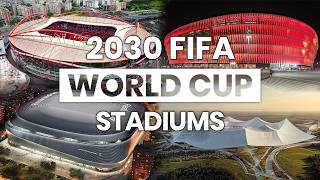
Which Country Will Host World Cup 2030?
The FIFA World Cup is the most prestigious tournament in global sports, drawing billions of viewers and uniting fans from every corner of the globe. For years, speculation surrounded the hosting rights for the 2030 edition. On December 11th, 2024, FIFA announced the definitive plan for the tournament, revealing a historic and unprecedented hosting structure.
Unlike previous tournaments hosted by a single nation or a small cluster of neighboring countries, the 2030 World Cup will be a global celebration spanning three continents. This decision marks a significant shift in how FIFA manages the world's largest sporting event, emphasizing inclusivity and the centenary of the first World Cup.
The Primary Hosts: Morocco, Portugal, and Spain
The core of the 2030 World Cup will be centered in North Africa and Europe. FIFA have announced that six nations will be involved in the broader organization, but the primary hosting duties fall to Morocco, Portugal, and Spain. These three countries will host the vast majority of the matches, providing a diverse array of world-class stadiums and infrastructure.
This joint bid represents a strategic partnership between the African and European confederations. By sharing the hosting duties, these nations aim to reduce the financial burden on a single country while expanding the tournament's reach across the Mediterranean. Spain, in particular, brings a wealth of experience having hosted the tournament in 1982 and various other international competitions.
Centenary Celebrations: Argentina, Paraguay, and Uruguay
One of the most unique aspects of the 2030 World Cup is the inclusion of South American nations. To commemorate the 100th anniversary of the first-ever FIFA World Cup, which was hosted by Uruguay in 1930, FIFA has arranged for celebratory matches to take place in South America.
- Uruguay: As the birthplace of the World Cup, Uruguay will host opening matches to honor the 1930 legacy.
- Argentina: The home of legendary football icons will host celebratory fixtures.
- Paraguay: Rounding out the South American trio, Paraguay will also participate in the centenary festivities.
While the majority of the group stages and the knockout rounds will occur in Morocco, Portugal, and Spain, these three South American nations will host a selection of opening games. This ensures that the spirit of the original tournament is preserved while the main event moves forward in a modern, expanded format.
Logistical Challenges and Innovations
Hosting a tournament across three continents presents unprecedented logistical challenges. FIFA and the organizing committees must address several key areas to ensure a seamless experience for players and fans:
- Travel and Transit: The distance between the South American celebratory matches and the main tournament in Europe and Africa will require precise scheduling and high-efficiency travel arrangements for the participating teams.
- Time Zone Management: Broadcasters and viewers will experience a wide range of time zones, requiring a flexible scheduling approach to maximize global viewership.
- Infrastructure Coordination: Coordinating stadium standards, security protocols, and fan zones across six different nations requires a level of international cooperation never before seen in sports.
Why FIFA Chose This Format
The decision to distribute the 2030 World Cup across multiple continents is driven by several factors. First, it allows FIFA to celebrate the centenary of the World Cup in the region where it all began. Second, it promotes the growth of the game by bringing the tournament to diverse markets simultaneously.
Furthermore, this model sets a precedent for future tournaments. As the number of participating teams in the World Cup continues to grow, the pressure on a single host nation to provide enough stadiums and hotels becomes immense. By utilizing a multi-continental approach, FIFA can ensure that the tournament remains sustainable and accessible.
Summary of the 2030 World Cup Hosts
To summarize, the 2030