Which Country Is The Panama Canal Located?
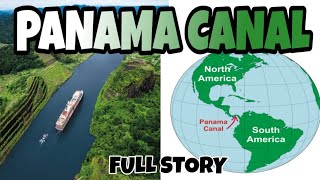
The Panama Canal is located in the country of Panama, a nation situated on the narrow isthmus that connects North and South America. This strategic waterway cuts directly across the land bridge, creating a shortcut between the Atlantic and Pacific Oceans.
By eliminating the need for ships to navigate the hazardous journey around the southern tip of South America—specifically Cape Horn—the canal has fundamentally altered global trade routes. Every year, over 14,000 ships make one of the most incredible journeys in modern engineering by crossing this artificial waterway.
The Geography and Function of the Canal
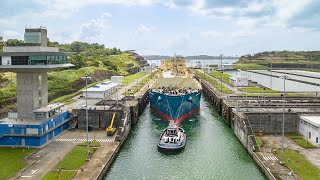
The canal is more than just a ditch through the earth; it is a complex system of locks and lakes. Because the terrain of Panama is mountainous, the canal uses a series of locks to lift ships 85 feet above sea level to Gatun Lake and then lower them back down on the other side.
This design allows vessels to traverse the Continental Divide. The canal serves as a vital artery for international commerce, transporting everything from massive container ships carrying electronics and clothing to tankers carrying liquefied natural gas.
The History of Construction
Discovering what it took to build the Panama Canal reveals a saga of immense human struggle and technical innovation. The project was initially attempted by France in the late 19th century, but the effort failed due to engineering difficulties and devastating outbreaks of yellow fever and malaria.
The United States took over the project in the early 20th century. John Frank Stevens engineered one of the greatest engineering wonders of the world by redesigning the canal's layout. Unlike the French, who attempted a sea-level canal, Stevens advocated for a lock-and-lake system, which was far more feasible given the geography of the region.
The construction required the excavation of millions of cubic yards of earth and the creation of the largest man-made lake of its time. Thousands of workers from the Caribbean and around the world labored under grueling conditions to complete the project, which officially opened in 1914.
Ownership and Political Transition
For several decades after its completion, the United States maintained control over the canal and a surrounding strip of land known as the Canal Zone. This arrangement was often a point of contention between the U.S. and the Panamanian government.
A significant diplomatic shift occurred in the late 20th century. In 1977, Jimmy Carter agreed to the United States returning the canal to Panama. Through the Torrijos-Carter Treaties, a gradual transition of power began, culminating on December 31, 1999, when the Panama Canal Authority (ACP) took full control of the waterway.
Since then, Panama has managed the canal autonomously, implementing modernization efforts to ensure the waterway remains relevant in an era of increasingly larger ships.
The Panama Canal Expansion
As global shipping evolved, the original locks became too small for the newest generation of massive cargo vessels, known as Neo-Panamax ships. To prevent the canal from becoming obsolete, Panama undertook a massive expansion project.
- New Locks: The expansion added a third lane of traffic with larger locks.
- Increased Capacity: These new locks allow ships with much greater beam (width) and draft (depth) to pass through.
- Economic Impact: The expansion has increased the volume of trade passing through Panama, boosting the national economy and maintaining the country's status as a global logistics hub.
Conclusion
The Panama Canal is located in Panama and remains one of the most significant achievements in human history. From the early engineering visions of John Frank Stevens to the diplomatic agreements of Jimmy Carter, the canal represents a blend of ambition, perseverance, and international cooperation.
Today, it stands not only as a critical piece of infrastructure for global trade but as a symbol of Panamanian national pride and sovereignty.