What Happens If Annealing Temperature Is Too High In PCR?
The Polymerase Chain Reaction (PCR) is a fundamental molecular biology technique used to amplify specific DNA sequences. One of the most critical variables in designing a successful PCR protocol is the annealing temperature (Ta). This is the temperature at which the oligonucleotide primers bind to their complementary sequences on the single-stranded DNA template.
When optimizing a reaction, finding the "sweet spot" for annealing is essential. However, a common troubleshooting challenge occurs when the annealing temperature is set too high. Understanding the biochemical impact of excessive heat during this phase is key to diagnosing failed experiments and improving yield.
The Role of Annealing Temperature in PCR
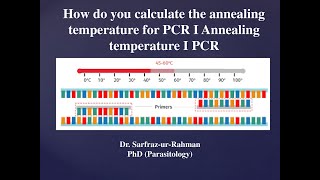
During the annealing step, the reaction temperature is lowered to allow primers to form hydrogen bonds with the target DNA. This process is governed by the melting temperature (Tm) of the primers—the temperature at which half of the DNA duplex dissociates into single strands.
Generally, the annealing temperature is set a few degrees below the Tm of the primers. This ensures that the primers have enough thermal stability to remain bound to the template long enough for the DNA polymerase to begin extension.
The Direct Effect of Excessively High Annealing Temperatures
When the annealing temperature is too high (approaching or exceeding the Tm of the primers), the primary result is reduced primer-template hybridization. Here is a detailed look at what happens inside the tube:
- Decreased Binding Affinity: High thermal energy disrupts the hydrogen bonds between the primer and the template. If the temperature is too high, the kinetic energy overcomes the attractive forces, preventing the primer from "sticking" to the DNA.
- Failure of Initiation: Since DNA polymerase requires a double-stranded starting point (the primer-template complex) to begin adding nucleotides, a lack of binding means the enzyme has nowhere to start.
- Reduced Product Yield: Even if some primers manage to bind, the efficiency of the reaction drops significantly. Fewer templates are amplified in each cycle, leading to a faint band or no band at all on an electrophoresis gel.
- Complete PCR Failure: In extreme cases where the Ta is significantly higher than the Tm, no hybridization occurs, resulting in a total absence of the target amplicon.
Comparing High vs. Low Annealing Temperatures
To better understand the problem, it is helpful to compare the outcomes of temperature imbalances:
- Temperature Too Low: Primers may bind non-specifically to sequences that are similar but not identical to the target. This leads to non-specific amplification, resulting in multiple bands or "smearing" on a gel.
- Temperature Too High: Primers are too selective or cannot bind at all. This leads to low yield or no product, but the product that is produced is usually highly specific.
Tips for Optimizing and Troubleshooting Problems with Annealing
If you suspect your annealing temperature is too high, consider the following strategies to rescue your reaction:
1. Perform a Gradient PCR
The most effective way to find the ideal Ta is using a gradient thermal cycler. This allows you to run the same reaction across a range of temperatures (e.g., 50°C to 65°C) simultaneously. The temperature that produces the strongest, cleanest band is your optimal Ta.
2. Re-calculate Primer Tm
Ensure your calculations are accurate. Use the formula Tm = 2(A+T) + 4(G+C) for short primers, or more advanced nearest-neighbor thermodynamics software for longer sequences. Remember that the salt concentration of your PCR buffer can shift the actual Tm.
3. Adjust the Temperature Incrementally
If you are seeing no bands, try lowering the annealing temperature in increments of 2°C to 5°C. Start by dropping the temperature slightly below your calculated Tm until a product appears.