Understanding Wh Question Visuals: A Quick Guide
Wh questions—who, what, where, when, why, how, which—are the backbone of English inquiry. They help learners gather information, clarify details, and engage in meaningful conversation. Visual tools can transform these abstract question words into concrete, memorable concepts. This article explores how to create and use visual representations of WH questions, offers practical tips, and provides free resources to get started.
Why Visuals Matter for Wh Questions
Visuals tap into the brain’s natural ability to process images faster than text. When a learner sees a picture of a clock next to the word “when,” the connection is immediate. Visual aids:
- Enhance recall by linking a question word to a memorable image.
- Support diverse learners—especially visual and auditory types—by offering multiple entry points.
- Facilitate teaching by providing a shared reference that can be used in class activities and quizzes.
Seven Types of Wh Questions
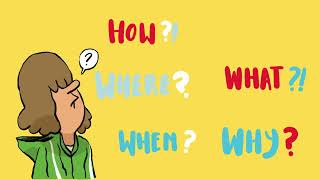
In many language lessons, instructors cover the core WH words. Below is a concise overview of the seven most common types, paired with a visual cue idea for each.
- Who – Person or people. Visual: a silhouette or a group of people.
- What – Objects, actions, or ideas. Visual: a question mark or a simple object icon.
- Where – Locations or directions. Visual: a map pin or a compass.
- When – Time or dates. Visual: a clock or calendar.
- Why – Reasons or explanations. Visual: a lightbulb or question marks around a brain.
- How – Methods or processes. Visual: a gear or a flowchart.
- Which – Choice or selection. Visual: a set of checkboxes or a “choose one” arrow.
Creating Effective Visuals
When designing visuals for WH questions, keep these principles in mind:
- Simplicity: Use clean lines and limited colors to avoid distraction.
- Consistency: Apply the same style across all seven icons to create a coherent set.
- Contextual relevance: Pair each icon with a short example sentence in a learning activity.
- Accessibility: Include text labels and alt attributes for screen readers.
Step‑by‑Step Example: The “Where” Icon
- Choose a map pin shape.
- Add a subtle globe or a simple outline of a building.
- Label it with the word “Where.”