Understanding the Venn Diagram of Cellular Respiration and Photosynthesis
In biology, two processes—cellular respiration and photosynthesis—are fundamental to the flow of energy through all living systems. While they occur in opposite directions, they are interdependent and together maintain the planet’s energy balance. A Venn diagram is a useful visual tool to compare and contrast these processes, highlighting shared elements, unique characteristics, and their overall relationship.
What Are Cellular Respiration and Photosynthesis?
Cellular Respiration
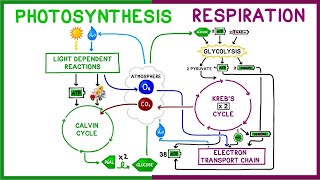
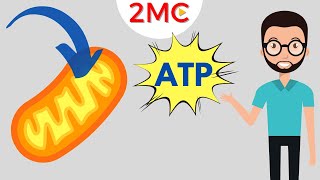
Cellular respiration is the metabolic pathway by which cells convert glucose and oxygen into energy (ATP), carbon dioxide, and water. The process is typically aerobic, meaning it requires oxygen, and it occurs in the mitochondria of eukaryotic cells. The main stages are glycolysis, the Krebs cycle, and oxidative phosphorylation.
Photosynthesis
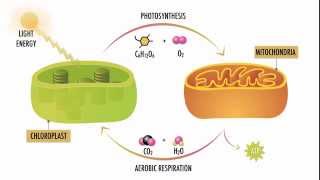
Photosynthesis is the process by which plants, algae, and some bacteria capture light energy to convert carbon dioxide and water into glucose and oxygen. This occurs in chloroplasts, primarily within the thylakoid membranes. The overall reaction is often summarized as:
- Carbon dioxide + water + light energy → glucose + oxygen
This 2‑minute animation discusses the four stages of photosynthesis: light absorption, photolysis, the Calvin cycle, and electron transport.
Key Similarities Highlighted in the Venn Diagram
- Carbon Cycle Connection: Both processes involve the conversion of carbon compounds—photosynthesis fixes CO₂ into glucose, while respiration breaks glucose back into CO₂.
- Energy Conversion: Each process transforms energy from one form to another. Photosynthesis stores light energy chemically, whereas respiration releases stored chemical energy for cellular use.
- Essential for Life: They are vital for sustaining ecosystems, providing food and oxygen for organisms.
- Enzymatic Regulation: Both rely on complex enzyme systems to control reaction rates and ensure efficiency.
Distinct Features in Each Process
Unique to Cellular Respiration
- Occurs in mitochondria and the cytosol.
- Requires oxygen for the final electron acceptor.
- Produces ATP, the universal energy currency.
- Generates CO₂ as a waste product.
Unique to Photosynthesis
- Occurs in chloroplasts, specifically within the thylakoid membranes.
- Relies on light as the energy source.
- Produces oxygen, a by‑product essential for aerobic organisms.
- Stores energy in the form of glucose, a complex carbohydrate.
Exploring the Overlap: How the Venn Diagram Illustrates Their Relationship
The overlapping section of the Venn diagram shows the interconnectedness of these processes. For instance:
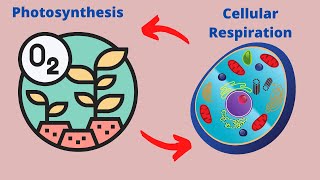
- Energy Flow: Photosynthesis creates glucose that becomes the substrate for respiration. In turn, the oxygen produced by photosynthesis is consumed during respiration.
- Carbon Balance: The CO₂ released during respiration is re‑captured by plants during photosynthesis, maintaining atmospheric equilibrium.
- Metabolic Pathways: The same enzymes, such as those