Mastering Math: The Importance of a Two Digit by Two Digit Multiplication Worksheet
Welcome to our comprehensive guide on developing mathematical fluency. For many students, the transition from single-digit multiplication to multi-digit operations represents a significant milestone in their academic journey. Mastering the two digit by two digit multiplication worksheet is a foundational skill that prepares learners for complex algebra, geometry, and real-world problem-solving.
Whether you are a teacher looking for classroom resources or a parent supporting home learning, consistent practice with well-structured worksheets is the most effective way to build confidence and accuracy. By breaking down large numbers into manageable steps, students learn the logic behind the math rather than just memorizing results.
How to Approach Two-Digit Multiplication
In this lesson, we will learn how to tackle two-digit multiplication using the standard algorithm. This method is the gold standard for efficiency, but it requires a clear understanding of place value. When students work through a 2 digit multiplication worksheet, they are essentially practicing the distributive property in a vertical format.
To solve a problem like 24 × 15, follow these steps:
- Multiply by the ones place: Multiply the top number by the digit in the ones column of the bottom number. For 24 × 5, the result is 120.
- Placeholder zero: Place a zero in the ones column of the next row. This represents the fact that you are now multiplying by the tens place (the 1 in 15 is actually 10).
- Multiply by the tens place: Multiply the top number by the digit in the tens column. For 24 × 1, the result is 24 (effectively 240).
- Add the partial products: Finally, add 120 and 240 to reach the final answer of 360.
Why Practice Matters
Repetition is essential for procedural memory. When students use a two digit by two digit multiplication worksheet, they aren't just solving problems; they are training their brains to recognize patterns. Consistent practice helps eliminate common errors, such as forgetting the placeholder zero or misaligning columns, which are frequent hurdles for young mathematicians.
We have many other resources available to help students move from simple facts to complex operations. By varying the difficulty level of your worksheets—starting with problems that do not require regrouping and moving toward those that do—you ensure that learners remain challenged without becoming overwhelmed.
Tips for Success in the Classroom
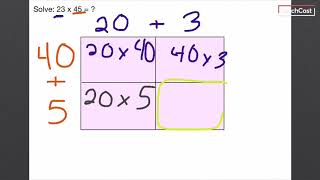
If you are looking for ways to engage students, consider integrating digital and physical resources. On this video we will learn how to visualize these problems using area models, which can be a great supplement to your standard worksheet practice. When students see that 24 × 15 represents the area of a rectangle, the abstract numbers begin to make sense.
Here are a few tips to maximize the effectiveness of your math sessions:
- Use Graph Paper: If a student struggles with alignment, have them write their numbers on graph paper. Each digit gets its own box, which naturally keeps columns straight.
- Color Coding: Use different colored pens for the partial products to help students distinguish between the ones-place multiplication and the tens-place multiplication.
- Timed Challenges: Use a 2 digit multiplication worksheet as a "sprint" activity to help students improve their speed and mental focus.
- Focus on Regrouping: Ensure students are comfortable with carrying numbers before moving on to larger, more complex equations.
Advanced Strategies and Resources
Once a student has mastered the standard algorithm, encourage them to check their work using estimation. For example, if the problem is 48 × 22, a student should know the answer must be close to 50 × 20, which is 1,000. If their calculated answer is drastically different, they know to go back and check their math