Understanding Tsunami Warnings in Northern California
Northern California's coastline is uniquely vulnerable to seismic activity due to its location along the Cascadia Subduction Zone and the Mendocino Triple Junction. When a strong earthquake hits the ocean floor, the displacement of water can trigger a series of powerful waves known as a tsunami. For residents and visitors in Humboldt County and surrounding coastal regions, understanding a tsunami warning in Northern California is critical for survival.
What Triggers a Tsunami Warning?
Tsunamis are typically generated by large-scale underwater disturbances. In Northern California, the primary threat comes from undersea earthquakes. For example, if a 7.0 magnitude earthquake is reported off the coast of Humboldt County, the U.S. National Weather Service (NWS) and the National Tsunami Warning Center (NTWC) immediately analyze the seismic data to determine if the vertical displacement of the seafloor was sufficient to push a column of water toward the shore.
Not every strong earthquake leads to a tsunami. Geologists, such as those from San Diego State University, note that the mechanism of the fault slip matters more than the magnitude alone. A strike-slip fault, where plates slide horizontally, is less likely to cause a tsunami than a thrust fault, where one plate is pushed upward over another.
Types of Tsunami Alerts
The National Weather Service uses a tiered system to communicate risk levels to communities along the coast. It is essential to know the difference between these alerts:
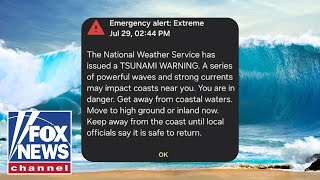
- Tsunami Warning: A dangerous tsunami is expected or occurring. Immediate evacuation of coastal areas is required.
- Tsunami Advisory: Strong currents and dangerous waves are expected. While a full-scale inundation may not occur, beaches and harbors should be cleared.
- Tsunami Watch: A significant earthquake has occurred, and a tsunami is possible. Residents should stay tuned for further updates.
In some instances, after monitoring the wave heights and propagation speeds, the National Weather Service may cancel a warning if the threat diminishes or the waves dissipate before reaching the shore.
Immediate Actions During a Warning
When a tsunami warning is issued for Northern California, time is the most valuable resource. Because the distance between the epicenter and the coast can be short, waves may arrive within minutes.
- Move Inland and Upward: The general rule is to move at least 100 feet above sea level or two miles inland.
- Avoid the Shoreline: Never go to the beach to watch a tsunami arrive. By the time the wave is visible, it is too late to escape.
- Follow Official Directions: Listen to local emergency management sirens and follow designated evacuation routes.
- Stay Put: Do not return to coastal areas until local authorities explicitly state it is safe to do so. Tsunami events consist of a series of waves; the first wave is rarely the largest.
The Geology of the Northern California Coast
The geography of Northern California contributes to how tsunamis impact the land. The rugged coastline of Humboldt and Mendocino counties can either shield some areas or funnel water into narrow bays, increasing the height and force of the surge. This phenomenon is why certain communities may experience severe flooding while others nearby remain untouched.
Experts emphasize that the "temporary" nature of these warnings can be deceptive. Even if the initial surge seems small, subsequent waves can be significantly more destructive. The interaction between the deep ocean trenches and the shallow continental shelf causes the wave to slow down and grow in height as it approaches the coast.
Preparing Your Household
Preparation is the best defense against natural disasters. Residents in high-risk zones should take the following steps:
- Map Your Route: Identify the fastest path to high ground from your home, workplace, and favorite coastal spots.
- Emergency Kit: Maintain a "go-bag" with water, non-perishable food, a flashlight, and a battery-