Understanding Tsunami Warnings in the United States
A tsunami is a series of powerful ocean waves caused by large-scale disturbances, such as underwater earthquakes, volcanic eruptions, or landslides. For coastal communities in the United States, particularly along the Pacific rim, understanding the protocols for a tsunami warning is a critical component of public safety. When a major seismic event occurs—whether near the U.S. coastline or across the Pacific Ocean—the National Tsunami Warning Center (NTWC) and the Pacific Tsunami Warning Center (PTWC) work in tandem to monitor threats and issue alerts.
How Tsunami Warnings Are Issued
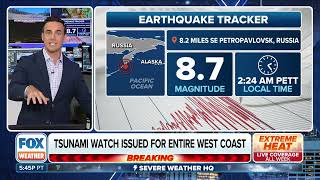
The U.S. National Tsunami Warning System utilizes a sophisticated network of sensors to track potential threats. When a massive earthquake occurs, such as those historically recorded off the coasts of Russia or Japan, seismographs detect the magnitude and location of the event. If the earthquake is strong enough and occurs in an area capable of displacing large volumes of water, officials evaluate the potential for a tsunami.
The National Weather Service (NWS) categorizes these alerts into four distinct levels:
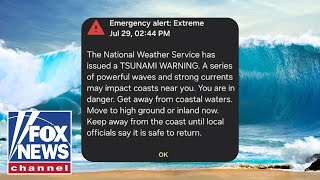
- Tsunami Warning: This is the most urgent alert. It indicates that a tsunami with the potential for widespread inundation is imminent, expected, or occurring. Coastal residents are advised to move to higher ground immediately.
- Tsunami Advisory: This alert indicates that a tsunami with a potential for strong currents or waves dangerous to those in or near the water is expected. Inundation is not expected, but the public should stay out of the water.
- Tsunami Watch: This is issued to alert emergency management and the public that an event has occurred which may later be upgraded to a warning or advisory. It is a period of heightened monitoring.
- Tsunami Information Statement: This informs the public that an earthquake has occurred but that there is no threat of a destructive tsunami.
The Impact of Pacific-Wide Events
The United States is particularly vulnerable to tsunamis generated by seismic activity across the Pacific Basin. Historical data shows that massive earthquakes in regions like Japan or Russia can send wave energy across the ocean, reaching the U.S. West Coast, Hawaii, and Alaska. While the waves may lose some intensity as they travel, they can still result in hazardous conditions, including strong surges, dangerous currents, and flooding in low-lying harbor areas.
In the event of a trans-Pacific earthquake, officials have enough lead time to monitor the wave's progress through deep-ocean assessment and reporting of tsunamis (DART) buoys. These buoys measure pressure changes on the seafloor, allowing scientists to confirm the existence of a tsunami and estimate its arrival time at various U.S. coastal locations. Residents in states like California, Oregon, and Washington are frequently reminded that even if a distant earthquake does not cause catastrophic damage, the resulting surges can be life-threatening for swimmers, boaters, and those on the shoreline.
Preparedness and Safety Protocols
Safety during a tsunami warning depends on quick action and adherence to local emergency instructions. If you live in a coastal area, it is essential to know your zone and your evacuation route.
- Know the Natural Warnings: If you are at the beach and feel a strong earthquake, see the ocean recede significantly, or hear a loud roar from the ocean, do not wait for an official siren. Move to high ground immediately.
- Follow Official Channels: Monitor local news outlets, the National Weather Service, and official social media accounts of emergency management agencies. Reliable information is the best tool for survival.
- Evacuate When Instructed: If local authorities issue an evacuation order, follow it without delay. Do not go to the coast to watch the waves; the speed and force of a tsunami are often underestimated.
- Prepare an Emergency Kit: Maintain a "go-bag" with essential items, including water, non-perishable food, flashlights, a radio, and important documents.