Mastering Geometry with a Triangle Similarity Activity
Understanding the concept of similar triangles is a fundamental pillar of geometry. For students aged 14+ studying GCSE Maths or high school geometry, grasping how proportions work within shapes is essential for solving complex spatial problems. A structured triangle similarity activity allows learners to move beyond theoretical formulas and apply mathematical logic to real-world scenarios.
What are Similar Triangles?
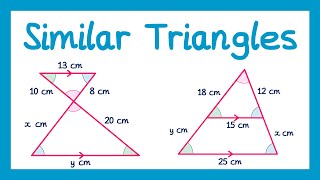
In geometry, two triangles are considered similar if they have the same shape but not necessarily the same size. Unlike congruent triangles, which are identical in every way, similar triangles maintain a specific relationship between their angles and sides. For two triangles to be similar, they must meet the following criteria:
- Equal Angles: All corresponding interior angles must be equal.
- Proportional Sides: The ratios of the lengths of their corresponding sides must be equal.
When triangles are similar, one is essentially a scaled-up or scaled-down version of the other. This relationship is defined by a scale factor, which is the constant ratio between corresponding sides.
Designing an Effective Triangle Similarity Activity
To truly understand similarity, students should engage in active learning. A comprehensive activity typically progresses through three distinct stages: identification, calculation, and application.
Step 1: Identifying Similarity Criteria
Before calculating lengths, students must determine if two triangles are actually similar. An activity should challenge students to identify similarity using these three primary theorems:
- AA (Angle-Angle): If two angles of one triangle are equal to two angles of another, the triangles are similar.
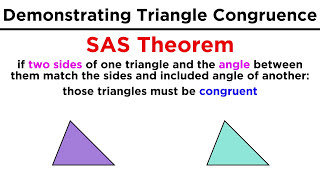
- SAS (Side-Angle-Side): If two sets of corresponding sides are proportional and the included angles are equal.
- SSS (Side-Side-Side): If all three sets of corresponding sides are proportional.
Step 2: Finding Missing Lengths
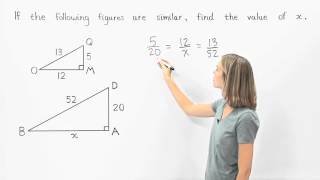
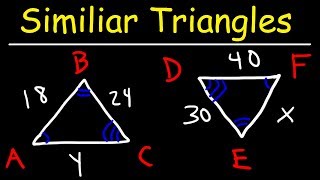
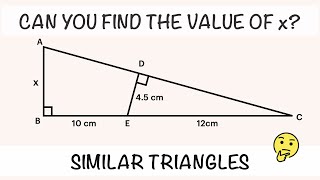
Once similarity is established, the core of the activity involves finding missing dimensions. This is where algebraic thinking meets geometry. The process generally follows these steps:
- Identify Corresponding Sides: Match the sides of the smaller triangle to the corresponding sides of the larger triangle.
- Calculate the Scale Factor: Divide the length of a side on the larger triangle by the corresponding side on the smaller triangle.
- Apply the Ratio: Multiply the known side of the smaller triangle by the scale factor to find the missing length of the larger triangle (or divide to go from large to small).
Step 3: Real-World Application (The Shadow Method)
One of the most engaging parts of a triangle similarity activity is applying the concept to the physical world. A classic exercise is calculating the height of a tall object, such as a flagpole or a tree, using shadows.
Because the sun's rays hit the earth at the same angle in a localized area, a person and a flagpole create two similar right-angled triangles with the ground. By measuring the person's height, the person's shadow, and the flagpole's shadow, students can use a simple proportion to find the flagpole's height without ever needing a ladder.
Resources for Further Practice
For students who need additional support or a visual walkthrough, several resources can supplement a hands-on activity. Video tutorials are particularly helpful for visualizing how sides correspond in rotated or reflected triangles. Many students find success by watching geometry tutorials that break down the process of setting up ratios step-by-step.
Additionally, digital platforms offer structured paths for mastery. For instance, courses on Khan Academy are always 100% free, allowing students to practice similarity problems and save their progress to track improvement over time.
Summary Checklist for Students
When completing a triangle similarity activity, keep this checklist in mind to avoid common errors:
- Check the angles first: Ensure the triangles are actually similar before applying ratios.