Understanding the Transformations Project Math
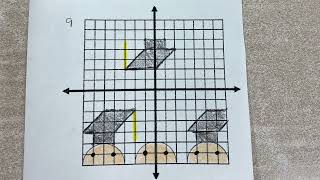
In 8th-grade mathematics, geometry expands beyond simple shapes and measurements to include the study of how figures move and change within a coordinate plane. A common academic milestone for students is the Transformations Project Math, a comprehensive assignment designed to bridge the gap between theoretical formulas and visual application. By creating projects—often in the form of instructional videos or digital presentations—students demonstrate their mastery of how geometric figures are manipulated.
Transformations are essential for understanding higher-level mathematics, physics, and computer graphics. Whether it is the movement of a character in a video game or the symmetry found in architecture, the principles of transformations are everywhere.
The Four Core Geometric Transformations
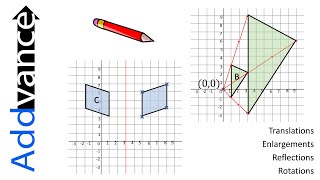
A successful transformations project must cover the four primary ways a figure can be altered on a graph. Each transformation has specific rules and properties that determine the final position and size of the image.
1. Translation (Sliding)
Translation is perhaps the simplest transformation. It involves moving a figure from one location to another without changing its size, shape, or orientation. In a Transformations Project: Translations segment, students typically demonstrate how to slide a point or a shape along the X and Y axes.
- The Rule: Every point of the figure moves the same distance in the same direction.
- Notation: This is often written as $(x, y) \rightarrow (x + a, y + b)$, where 'a' represents the horizontal shift and 'b' represents the vertical shift.
2. Reflection (Flipping)
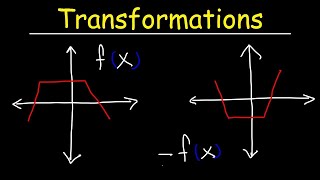
Reflection creates a mirror image of a figure across a specific line, known as the line of reflection. This transformation preserves the size and shape of the figure but flips its orientation.
- Common Axes: Reflections most frequently occur across the x-axis, the y-axis, or the line $y = x$.
- Key Property: The distance from any point on the original figure to the line of reflection is equal to the distance from the reflected point to that same line.
3. Rotation (Turning)
Rotation involves turning a figure around a fixed point called the center of rotation. While the shape and size remain identical, the orientation changes based on the angle of the turn.
- Standard Rotations: Students typically focus on $90^{\circ}$, $180^{\circ}$, and $270^{\circ}$ turns.
- Direction: Rotations can be clockwise or counter-clockwise. A $90^{\circ}$ clockwise rotation is mathematically equivalent to a $270^{\circ}$ counter-clockwise rotation.
4. Enlargement (Scaling)
Unlike the first three transformations—which are "rigid motions" because they preserve size—enlargement (also known as dilation) changes the size of the figure. This results in a figure that is similar in shape but different in scale.
- Scale Factor: The ratio by which the figure grows or shrinks. A scale factor greater than 1 results in an enlargement, while a scale factor between 0 and 1 results in a reduction.
- Center of Dilation: The fixed point from which the figure is scaled.
Applying Math Through Creative Projects
Many 8th-grade students, such as those in groups led by Brian, Gloria, Vanessa, and Christoval, find that the best way to learn these concepts is through multimedia projects. Creating an instructional video allows students to visualize the "movement" of the shapes in real-time, making the abstract coordinates feel more tangible.
Integrating creative elements—such as using a catchy chorus from a song like "Hey Ya" by OutKast in the credits—helps make the learning process more engaging. When students are tasked with teaching others how to perform these transformations, they move from passive learning to active mastery.
Practical Tips for Mastering Transformations
To excel in a transformations