The History of Bosnia and Herzegovina
The history of Bosnia and Herzegovina is a dramatic and inspiring story of resilience, cultural synthesis, and geopolitical struggle. Situated at the crossroads of Central Europe and the Balkans, the region has been shaped over centuries by the intersection of diverse empires, religions, and ethnic identities.
Ancient Roots and Early Medieval Period
The territory of Bosnia and Herzegovina has been inhabited since prehistoric times, with the Illyrians being among the earliest known settlers. By the 1st century AD, the region fell under the influence of the Roman Empire, which integrated the area into its administrative structure, leaving behind remnants of roads and fortifications.
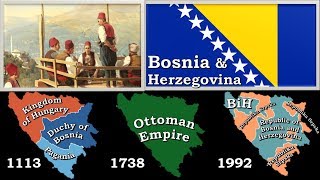
During the early Middle Ages, the region saw the arrival of Slavic tribes. By the 12th century, the Bosnian state began to emerge as a distinct entity. The Banate of Bosnia grew in power, eventually evolving into the Kingdom of Bosnia in the 14th century under King Tvrtko I. This era was characterized by a unique religious landscape, including the presence of the Bosnian Church, which existed alongside Catholicism and Orthodox Christianity.
Ottoman Rule and Cultural Transformation
In the 15th century, the geopolitical landscape shifted drastically when the Ottoman Empire conquered the region. Ottoman rule lasted for nearly four centuries, fundamentally altering the demographic and cultural fabric of the land. One of the most significant legacies of this period was the introduction of Islam, which was adopted by a large portion of the population.
Under Ottoman administration, cities like Sarajevo were founded and became vibrant centers of trade, art, and learning. This period established the multicultural identity of Bosnia and Herzegovina, where mosques, cathedrals, and synagogues often existed in close proximity, creating a unique social tapestry known as the "Bosnian melting pot."
The Austro-Hungarian Era
The decline of the Ottoman Empire led to a shift in power in the late 19th century. Following the Congress of Berlin in 1878, Bosnia and Herzegovina was placed under the administration of the Austro-Hungarian Empire, though it remained nominally under Ottoman sovereignty until 1908.
The Austro-Hungarian period brought rapid modernization, including the introduction of new infrastructure, legal systems, and Western European architecture. However, this era also saw rising nationalist tensions. The most pivotal event of this period occurred in 1914, when Archduke Franz Ferdinand was assassinated in Sarajevo, an event that served as the immediate catalyst for World War I.
The Yugoslav Period
Following the end of World War I, Bosnia and Herzegovina became part of the Kingdom of Serbs, Croats, and Slovenes, later renamed the Kingdom of Yugoslavia. After the devastation of World War II, the region was integrated into the Socialist Federal Republic of Yugoslavia under the leadership of Josip Broz Tito.
During the Yugoslav era, Bosnia and Herzegovina was one of the six constituent republics. Tito’s policy of "Brotherhood and Unity" aimed to suppress ethnic nationalism and promote a shared Yugoslav identity. For several decades, the region experienced economic growth and relative stability, though underlying ethnic and political tensions remained dormant beneath the surface.
Disintegration and the Bosnian War
The late 1980s and early 1990s saw the disintegration of the former Socialist Federal Republic of Yugoslavia. As other republics sought independence, Bosnia and Herzegovina held a referendum in 1992, leading to its declaration of independence.
This transition triggered a brutal conflict known as the Bosnian War (1992–1995). The war was characterized by intense fighting between Bosniaks, Serbs, and Croats, resulting in widespread displacement and significant loss of life. The conflict eventually ended with the signing of the Dayton Peace Accords in 1995.
Modern Bosnia and Herzegovina
The Dayton Agreement established the current political structure of the country, dividing it into two primary entities: the Federation of Bosnia and Herzegovina and the Republika Srps