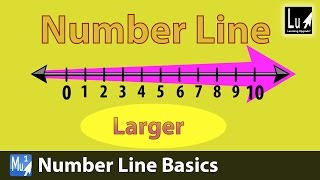
The Importance of a Printable Number Line 1-100 for Early Learners
Developing a strong sense of number sequence and spatial representation is a cornerstone of early mathematics. For students in Grade 2 and below, a printable number line 1-100 serves as a critical visual scaffold. It transforms abstract numerical concepts into a tangible map, allowing children to see exactly how numbers grow, relate to one another, and move toward a larger goal.
Whether you are a parent homeschooling your child or a teacher preparing a classroom, providing a physical reference for numbers 1 through 100 helps students master basic arithmetic and number recognition with greater confidence.
How a Number Line Supports Mathematical Growth
A number line is more than just a list of digits; it is a tool for visualization. When students interact with a number line, they are practicing several cognitive skills simultaneously:
- Sequential Counting: Writing 1-100 on a number line reinforces the order of numbers and helps students identify patterns, such as the repetition of digits in the ones place.
- Handwriting and Fine Motor Skills: The act of filling in a blank number line encourages precise handwriting and spatial awareness.
- Understanding Magnitude: By seeing the distance between 1 and 100, children begin to understand the concept of "greater than" and "less than" visually.
Using the Open Number Line for Addition within 100
As students progress toward more complex math, they move from a static number line to an open number line. This is particularly effective for adding within 100. Unlike a standard line where every single digit is marked, an open number line allows students to mark only the numbers relevant to their specific problem.
For example, if a student is adding 45 + 23, they can start at 45 and make "jumps" of 10, then smaller jumps of 1. This method reduces the likelihood of counting errors and teaches students how to decompose numbers to make mental math easier. It shifts the focus from rote counting to strategic thinking.
Engaging Activities for Different Age Groups
Depending on the learner's level, a printable number line can be used in various creative ways to keep them engaged.
For Preschoolers: The Number Line Car
For the youngest learners, math should feel like play. A "Number Line Car" activity involves placing a small toy car on a printed number line. As the child "drives" the car from one number to the next, they count aloud. This tactile approach connects physical movement with numerical progression, making the concept of addition as simple as moving a car forward a few spaces.
For Grade 1 and 2: Filling the Gaps
For primary students, provide a number line with missing values. Ask them to identify the missing numbers to strengthen their recall and sequence recognition. This is an excellent way to transition from guided learning to independent mastery.
Tips for Implementing Number Lines at Home or School
To get the most out of your printable resources, consider these implementation strategies:
- Laminate for Reusability: Laminate your printable number line so students can use dry-erase markers to jump, circle, or highlight numbers without ruining the paper.
- Integrate Multimedia: Supplement physical printables with instructional content. Many educators recommend visiting resources like Mathantics for free math videos that explain the logic behind number lines.
- Combine with Digital Tools: Use platforms like Seesaw to assign number line activities. Watching a brief instructional video before completing a digital task ensures the student understands the objective.
- Create a "Giant" Version: Use painter's tape to create a life-sized number line on the floor. Let children physically jump from 10 to 20 to 30, turning a math lesson into a kinesthetic experience.