Number Bonds Kindergarten Worksheets: A Simple Guide for Parents and Teachers
Number bonds are one of the most foundational tools in early mathematics education. For kindergarteners, understanding how numbers combine and split sets the stage for everything from addition to subtraction. Number bonds kindergarten worksheets offer a visual and hands-on way for young learners to grasp these essential concepts. Whether you are a classroom teacher, a homeschooling parent, or a caring caregiver, the right worksheets can make a significant difference in how comfortably a child transitions into more advanced math.
What Are Number Bonds?
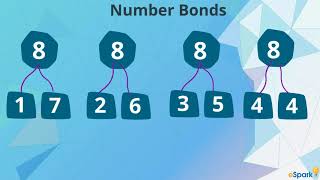
At their core, number bonds are diagrams that show the relationship between a whole number and its parts. Think of them as simple pictures that represent how numbers can be broken apart and put back together. A typical number bond drawing features a circle labeled with the whole number and two connected circles representing the component parts.
For example, the number five can be represented as a whole with the parts two and three branching off it. This visual approach helps children see that numbers are flexible rather than fixed. When students encounter problems like six plus four, they can quickly recall that six and four make ten, because they have practiced the relationship through repeated exposure to number bond models.
This method aligns closely with the Singapore Math approach, which emphasizes conceptual understanding before procedural fluency. Students who practice with number bonds build an intuitive sense of quantity and equality that serves them well throughout their math education.
Why Use Number Bonds Kindergarten Worksheets?
Worksheets provide structure and repetition, both of which are crucial when children are first encountering abstract mathematical ideas. Here are several reasons why number bonds worksheets are so effective for kindergarten students.
- Visual learning support: Young children benefit enormously from seeing math represented pictorially. Worksheets give them concrete images to interpret rather than abstract symbols alone.
- Gradual skill building: Quality worksheets move from simple tasks, such as filling in missing parts of a number bond, to more complex exercises involving missing wholes or combined operations.
- Independent practice: Children can work through worksheets at their own pace, building confidence through repeated success.
- Parent and teacher insight: Completed worksheets offer clear evidence of what a child understands and where additional support may be needed.
Using a number bonds worksheet regularly can help solidify the connection between hands-on manipulatives and the written symbols children will encounter in正式 math instruction.
Try This Activity to Practice Number Bonds!
Beyond printed worksheets, kinesthetic activities deepen understanding significantly. Consider this engaging approach to teaching number families.
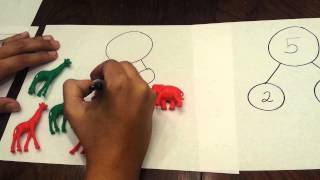
Gather small manipulatives such as colored counters, buttons, or even toy animals. Ask the child to sort the items into two groups based on a chosen attribute, such as color, size, or type. Once the groups are separated, guide the child through creating an addition story that describes what they have done. For instance, if five red blocks and three blue blocks are separated on the table, the child might say, "Five red blocks and three blue blocks make eight blocks altogether." Then, draw or write the corresponding number bond to match the story.
Activities like the one demonstrated by Archway Glendale, which uses animals separated by color and type to teach number families, bring the abstract concept to life. By connecting physical manipulation with visual representation and verbal description, children engage multiple learning pathways simultaneously.
How to Make Your Own Number Bonds Worksheet
Creating custom number bonds kindergarten worksheets is straightforward and allows you to tailor practice to your child's or student's current level. You can use free online tools or simply draw templates on paper. Start by designing number bonds that cover numbers up to ten, since this range is developmentally appropriate for most kindergarteners.
Include a mix of exercise types across your pages:
- Find the whole: Provide the two parts and ask the student to determine the total.
- Find a part: Give the whole and one part, and ask the student to identify the missing part.
- Create the bond: Show two quantities and ask the student to draw the complete number bond themselves.
- Write the equation: Have the student translate the number bond into a written addition sentence.
Gradually increase difficulty by extending to numbers up to twenty as children demonstrate mastery of smaller combinations.
Connecting Number Bonds to Subtraction
While number bonds are often introduced alongside addition, they are equally valuable for mastering subtraction. When a child understands that seven can be broken into five and two, they inherently understand that seven minus two equals five. This part-part-whole thinking reduces the need to memorize subtraction facts in isolation and instead builds genuine number sense.
Introducing subtraction through number bonds gives students a visual anchor they can return to whenever they feel uncertain. Rather than relying solely on counting backward, they learn to think of subtraction as finding a missing part within a known whole.
Making the Most of Number Bonds Practice
Consistency matters more than perfection when it comes to early math practice. Short, focused sessions of fifteen to twenty minutes several times per week yield better results than occasional lengthy study marathons. Pair worksheet work with hands-on manipulatives whenever possible, and celebrate small victories to keep motivation high.
As children grow more comfortable with number bonds, they will find that mental math becomes easier, word problems feel less intimidating, and the transition to formal arithmetic follows a smoother path. With the right combination of structured worksheets and playful exploration, number bonds become not just a lesson topic but a lasting way of thinking about numbers.