Understanding the Mini Tsunami in Argentina 2026
On January 12, 2026, the Atlantic coast of the Buenos Aires province in Argentina experienced a sudden and violent maritime event. Often referred to as a "mini tsunami," this phenomenon caught tourists and local residents by surprise, resulting in significant coastal flooding, property damage, and the tragic loss of one life.
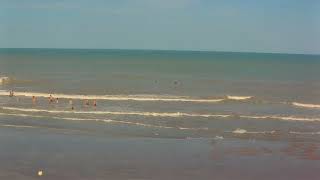
While the term "tsunami" is commonly associated with underwater earthquakes or volcanic eruptions, the event in Argentina was a different meteorological occurrence. Raw footage captured by witnesses shows the exact moments a powerful surge of water swept across crowded beaches, swallowing shorelines and pulling debris—and in some cases, vessels—toward the horizon.
The Mechanics of a Meteotsunami
Scientific analysis of the event confirms that the surge was actually a meteotsunami. Unlike traditional tsunamis, which are geologically driven, a meteotsunami is triggered by rapid changes in atmospheric pressure, strong winds, or severe storm fronts moving over the ocean.
In the case of the January 12 event, specific atmospheric conditions aligned to create a resonance effect. As a pressure disturbance moved across the Atlantic, it pushed the water surface downward and then upward, creating a wave train that amplified as it reached the shallow waters of the Argentine coast. This resulted in towering waves, some reported to be up to 30 feet high, which crashed into the shore with far more force than a standard tide or storm surge.
Impact on the Buenos Aires Coastline
The impact was felt most severely in highly populated beach areas. Social media footage and eyewitness accounts describe a horrifying scene where the ocean appeared to retreat momentarily before returning as a wall of water. This "drawback" is a classic warning sign of a tsunami, though in this instance, it occurred so rapidly that many beachgoers had no time to react.
- Human Toll: Reports confirm that one person died during the surge, highlighting the danger of these unpredictable events.
- Infrastructure Damage: The force of the water damaged coastal walkways and flooded beachfront properties.
- Maritime Loss: Witnesses noted the disappearance of boats and small watercraft, which were swept away by the receding current.
Analyzing the Evidence
Digital evidence from the event provides critical data for climatologists and emergency responders. Coordinates such as -37.7442517, -57.4184216 help map the exact points of impact, allowing researchers to understand how the wave interacted with the local topography of the Buenos Aires province.
Videos shared on platforms like X (formerly Twitter) and Instagram serve as a grim reminder of the power of the ocean. One particular clip captures the moment the wave swallowed a crowded section of the beach, illustrating how a "mini" event in geological terms can still be catastrophic for those on the ground.
Safety and Prevention for Future Events
The 2026 Argentina event underscores the need for better public awareness regarding meteotsunamis. Because these events are driven by weather rather than seismic activity, they may not always trigger traditional tsunami warning systems.
Experts recommend the following safety protocols when visiting Atlantic coastal regions during volatile weather patterns:
- Monitor Atmospheric Alerts: Pay close attention to rapid pressure drops and severe weather warnings issued by meteorological agencies.
- Recognize the Drawback: If the ocean recedes unusually far and quickly, move to higher ground immediately.
- Avoid Low-Lying Areas: During periods of intense storm activity, avoid camping or staying in structures built directly on the sand.
- Follow Official Instructions: Heed the warnings of local authorities and lifeguards who monitor sea levels in real-time.
Conclusion
The Mini Tsunami Argentina 2026 was a stark demonstration of how atmospheric instability can manifest as a deadly maritime force. While it lacked the global scale of a tectonic tsunami