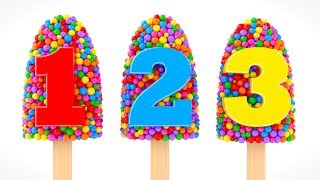
Exploring Maths Colouring: From Early Learning to Complex Theorems
Maths colouring is more than just an artistic activity for children; it is a versatile pedagogical tool and a subject of deep mathematical inquiry. By integrating visual stimuli with numerical and geometric concepts, educators can make abstract ideas more tangible, while mathematicians use colouring to solve complex topological problems.
Colouring in Early Childhood Mathematics
For young learners, the intersection of art and arithmetic helps bridge the gap between concrete objects and symbolic representation. Many primary school curricula use school subject colors to help students organize their thoughts and categorize information visually.
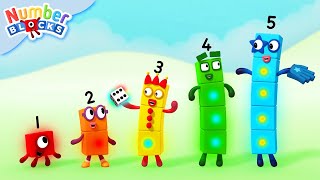
Interactive tools, such as those found in the Numberblocks series, utilize a "colourful" approach to number sense. By assigning specific colors to numbers or blocks, children can visually perceive patterns, such as odd and even numbers or multiples of a specific digit. This method reduces cognitive load, allowing students to focus on the logic of the operation rather than just the symbols.
Gamified Maths Colouring Activities
Gamification is a powerful way to engage students in mathematical thinking. Several types of colouring-based puzzles are commonly used to develop spatial reasoning and logic:
- Connect-the-Dots: Advanced versions of this activity require students to connect dots of the same color without crossing existing lines. This introduces basic concepts of graph theory and pathfinding.
- Colour-by-Number: These worksheets require students to solve an equation (e.g., 5 + 3 = 8) to determine which color to apply to a specific section of a drawing.
- Symmetry Drawing: Students colour one half of a geometric shape and must mirror those colors exactly on the opposite side, reinforcing the concept of reflectional symmetry.
The Mathematics of Colouring: The Four Color Map Theorem
Beyond the classroom, "colouring" is a formal term used in discrete mathematics and graph theory. One of the most famous examples is the Four Color Map Theorem.
The theorem posits that any map on a plane can be filled with just four colors such that no two adjacent regions (regions sharing a common boundary, not just a point) have the same color. While it sounds simple, this was one of the first major theorems to be proven using a computer. The proof involved reducing all possible maps to a set of unavoidable configurations and checking them algorithmically.
This theorem is not merely a curiosity; it has practical applications in:
- Cartography: Designing clear, readable maps.
- Scheduling: Avoiding conflicts in time-tabling where "adjacent" events cannot happen simultaneously.
- Frequency Assignment: Ensuring that nearby cellular towers do not use the same frequency to avoid interference.
Advanced Theoretical Problems: The Hadwiger–Nelson Problem
For those interested in higher-level mathematics, colouring extends into the realm of the Hadwiger–Nelson problem. This problem asks for the minimum number of colors required to color the plane such that no two points at a distance of exactly one unit are the same color.
Unlike the Four Color Theorem, which deals with defined regions, the Hadwiger–Nelson problem deals with infinite points. For decades, mathematicians knew the answer was between 4 and 7. Recent breakthroughs in combinatorial geometry have helped narrow this range, demonstrating that the "chromatic number of the plane" is a complex challenge involving both geometry and set theory.
Computational Colouring and Algorithms
In the modern era, maths colouring has evolved into the development of numerical algorithms. Computer scientists use colouring algorithms to solve 2D equations and optimize data structures. For instance, in compiler design, register allocation is treated as a graph colouring problem, where the goal is to assign a limited number of hardware registers to variables without conflict.
Conclusion
Whether it is a child using a Numberblocks worksheet to understand addition or a mathematician exploring the boundaries of the Hadwiger–Nelson problem, maths colouring