Understanding the Labels of a Wave
When you first encounter a wave diagram in GCSE physics, the multitude of terms can feel overwhelming. Learning how to quickly identify each label not only boosts your confidence in the classroom but also lays a solid foundation for more advanced topics such as optics and acoustics. This article breaks down the essential wave labels, compares transverse and longitudinal waves, and offers practical tips for mastering them.
Why Labeling Matters
Accurate labeling serves three key purposes:
- Clarifies concepts: Each label represents a physical property that can be measured or observed.
- Facilitates problem solving: Knowing where the crest, trough, or compression is helps you calculate wavelength, frequency, and speed.
- Improves communication: Using the correct terminology ensures you can discuss wave phenomena with teachers and peers without confusion.
Core Labels Common to All Waves
The following terms appear on both transverse and longitudinal wave diagrams. Recognizing them is the first step toward mastering wave physics.
- Amplitude (A) – The maximum distance a point on the wave moves from its equilibrium position. In a transverse wave, amplitude is measured vertically; in a longitudinal wave, it is the maximum displacement of particles along the direction of travel.
- Wavelength (λ) – The distance between two successive points that are in phase, such as crest to crest or compression to compression.
- Frequency (f) – The number of complete cycles that pass a fixed point per second, measured in hertz (Hz).
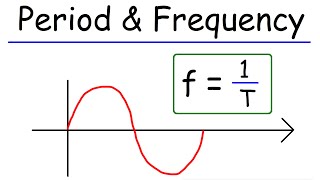
- Period (T) – The time taken for one full cycle; it is the inverse of frequency (T = 1/f).
- Wave speed (v) – The rate at which the wave propagates through a medium, given by v = f × λ.
Labels Specific to Transverse Waves
In a transverse wave, the particle motion is perpendicular to the direction of wave travel. Common diagrams illustrate the following features:
- Crest – The highest point of the wave, where the displacement is positive and equal to the amplitude.
- Trough – The lowest point, where the displacement is negative and equal in magnitude to the amplitude.
- Node (in standing waves) – A point that remains stationary, showing zero amplitude.
- Antinode (in standing waves) – A point of maximum amplitude, located midway between two nodes.
Quick Tip for Transverse Waves
When you see a diagram with a sinusoidal shape, trace the curve from one crest to the next to determine the wavelength. Count the number of complete cycles that