Understanding Labeling Waves: A Guide to Wave Anatomy
In the study of physics, specifically within GCSE science and introductory mechanics, understanding how to identify the components of a wave is fundamental. Labeling waves is the process of identifying the specific physical properties that define how energy moves through a medium. Whether you are dealing with sound, light, or water, the basic anatomy of a wave remains consistent.
To analyze wave behavior, one must first distinguish between the two primary types of waves: transverse and longitudinal. Each requires a different approach to labeling to accurately describe its movement and energy transfer.
The Function of Wave Labeling
The primary function of labeling waves is to provide a standardized language for scientists and students to quantify wave motion. By identifying specific points on a wave, we can calculate critical values such as frequency, wavelength, and velocity. Without accurate labeling, it would be impossible to determine how a signal travels through a fiber optic cable or how a musical note reaches the human ear.
Labeling Transverse Waves
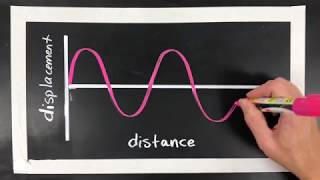
A transverse wave is one in which the particles of the medium move perpendicular to the direction of the wave's travel. Common examples include light waves and ripples on a pond. When labeling a transverse wave, there are four key features to identify:
- Crest: The highest point of a wave cycle.
- Trough: The lowest point of a wave cycle.
- Amplitude: The maximum displacement of a particle from its equilibrium (rest) position. This is measured from the center line to either the crest or the trough.
- Wavelength: The distance between two consecutive identical points, such as from one crest to the next crest or one trough to the next trough.
To quickly label a transverse wave, start by drawing a horizontal equilibrium line. Identify the peaks (crests) and valleys (troughs), then measure the distance between the peaks to find the wavelength.
Labeling Longitudinal Waves
Unlike transverse waves, longitudinal waves move the medium parallel to the direction of wave travel. Sound waves are the most prominent example. Because these waves do not have crests and troughs, they use different terminology for labeling:
- Compression: A region in a longitudinal wave where the particles are closest together. This represents a high-pressure area.
- Rarefaction: A region where the particles are spread furthest apart. This represents a low-pressure area.
- Wavelength: In a longitudinal wave, the wavelength is the distance from the center of one compression to the center of the next compression.
Labeling longitudinal waves can be more challenging because they are often visualized as "springs" or "pulses" rather than curves. Focus on the density of the particles to differentiate between compressions and rarefactions.
Comparing Wave Features
While the labels differ between transverse and longitudinal waves, the mathematical relationships governing them are the same. Both types of waves are characterized by their frequency (the number of waves passing a point per second) and their period (the time it takes for one complete wave to pass).
Key Comparison Summary:
- Transverse waves use crests and troughs; longitudinal waves use compressions and rarefactions.
- Amplitude in transverse waves is a vertical height; in longitudinal waves, it relates to the pressure change.
- Wavelength is a spatial measurement of one full cycle for both types.
Practical Tips for Accurate Labeling
When practicing wave labeling for physics examinations or laboratory reports, follow these steps to ensure accuracy:
First, always identify the direction of travel. This tells you immediately whether you are looking at a transverse or longitudinal wave. Second, ensure your amplitude measurement starts from the rest position, not from the trough to the crest (which would be the total height, not the amplitude).
Finally