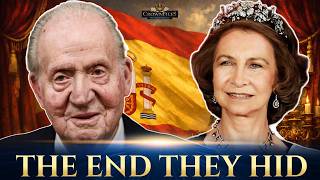
King Juan Carlos I of Spain: A Monarch Who Shaped Modern Spain
King Juan Carlos I, who reigned from 27 Nov 1975 until his abdication on 19 June 2014, is one of the most consequential figures in recent Spanish history. His tenure bridged the authoritarian era of General Francisco Franco and the democratic Spain that exists today. While his legacy is mixed, his impact on the nation’s political evolution, European integration, and the royal institution is undeniable.
Early Life and Preparation for the Crown
Born in Rome on 5 January 1938, Juan Carlos was the son of Don Juan, Count of Barcelona, and Princess María de las Mercedes of Bourbon‑Two Sicilies. The family lived in exile after the Spanish Civil War, moving between Portugal and Italy. In 1954, at the age of sixteen, he entered the Spanish Military Academy in Zaragoza, where he received a traditional officer’s training under the watchful eye of Franco’s military establishment. This education was part of Franco’s plan to ensure a smooth succession, positioning Juan Carlos as the “future” monarch who would preserve the regime’s interests.
The Transition to Democracy
When Franco died on 20 Nov 1975, Juan Carlos was proclaimed king on 27 Nov 1975. International observers expected him to continue the authoritarian policies of his predecessor. Instead, the new king quickly demonstrated a different vision. He appointed Adolfo Suárez as prime minister, a reform‑oriented politician who would draft a new constitution. Together they oversaw the legalization of political parties, the first free elections in 1977, and the ratification of the Spanish Constitution of 1978, which established a parliamentary monarchy and guaranteed fundamental freedoms.
For decades, speculation was rife over the whereabouts of real power in post‑Franco Spain. King Juan Carlos’s decisive actions during this period clarified that the monarchy could serve as a stabilising force rather than a tool of autocracy.
Defending Democracy: The 23‑F Coup Attempt
On 23 February 1981, Lieutenant Colonel Antonio Tejero led a group of armed officers into the Congress of Deputies, attempting a coup d’état (the “23‑F” incident). While the nation held its breath, King Juan Carlos appeared on national television in his military uniform, condemning the rebellion and urging the armed forces to respect the constitution. His firm stance helped dissolve the coup within hours and reinforced the credibility of Spain’s fledgling democracy.
European Integration and International Profile
Beyond domestic politics, Juan Carlos championed Spain’s integration into Europe. He supported Spain’s accession to the European Economic Community in 1986, a move that accelerated economic modernization and solidified Spain’s place on the continent. The king’s diplomatic tours—ranging from visits to the United Kingdom to state meetings in the United States—enhanced Spain’s international standing and promoted cultural exchange.
Controversies and the Road to Abdication
Despite his early achievements, the later years of Juan Carlos’s reign were marred by personal scandals and financial allegations. In 2012, a highly publicised elephant‑hunting trip to Botswana sparked outrage as Spain grappled with severe austerity measures. Subsequent investigations linked the former king to offshore accounts and alleged gifts from businessmen, eroding public trust.
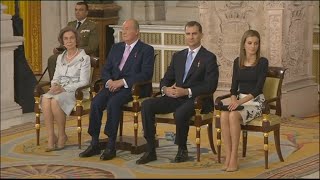
Facing mounting pressure, Juan Carlos announced his abdication on 2 June 2014, naming his son, Felipe VI, as his successor. The abdication ceremony on 19 June 2014 marked the end of an era and signalled a generational shift within the Spanish monarchy.
Life After the Crown
After stepping down, Juan Carlos relocated to the United Arab Emirates, where he has lived in relative seclusion. Speculation continues over his whereabouts and the extent of his involvement in ongoing legal matters. While he no longer holds any official duties, his presence remains a point of discussion in Spanish media and among royal observers.
Assessing the Legacy of King Juan Carlos
King Juan Carlos’s legacy is complex:
- Democratic Transition: His decisive support for the 1978 Constitution and his role in quashing the 23‑F coup cemented Spain’s democratic foundations.
- European Integration: He advocated for Spain’s entry into the European Community, fostering economic growth and international cooperation.
- Royal Reputation: Later scandals tarnished the image of the monarchy, prompting calls for greater transparency and accountability.
- Abdication: By voluntarily stepping aside, he facilitated a smoother generational transition to King Felipe VI.
Conclusion
From his accession on 27 Nov 1975 to his abdication in 2014, King Juan Carlos I guided Spain through a period of profound transformation. While his early years are celebrated for safeguarding democracy, his later controversies remind us of the challenges inherent in modern monarchies. As Spain continues to evolve, the story of Juan Carlos serves as a testament to the delicate balance between tradition and change, and to the enduring importance of constitutional institutions.
Keywords: Juan Carlos, former king, king juan carlos, #KingJuanCarlos, #HistoryOfSpain, #RoyalFamily.