Is There Currently A Tsunami Watch In Hawaii?
When a significant seismic event occurs in the Pacific basin, residents and visitors in Hawaii often seek immediate answers regarding tsunami watches and warnings. Because of its central location in the Pacific Ocean, the Hawaiian archipelago is particularly susceptible to displaced water caused by underwater earthquakes, volcanic eruptions, or landslides.
To determine if there is currently a tsunami watch in Hawaii, the most reliable method is to consult official government sources. Tsunami notifications are not static; they evolve rapidly based on real-time data from deep-ocean pressure sensors and seismic monitors.
Understanding Tsunami Watches vs. Warnings
It is critical to understand the distinction between a "watch" and a "warning," as the required actions for each differ significantly. Official agencies, such as the Pacific Tsunami Warning Center (PTWC), use specific terminology to communicate risk levels:
- Tsunami Watch: A watch is issued when a distant earthquake has occurred that has the potential to generate a destructive tsunami. This is a state of readiness. It means that while a threat is possible, it is not yet confirmed that a dangerous wave will reach the shoreline.
- Tsunami Warning: A warning is the highest level of alert. It indicates that a tsunami has been generated and is expected to hit specific coastal areas. This requires immediate evacuation to higher ground or inland areas.
- Tsunami Advisory: An advisory is issued when strong currents or dangerous waves are expected, but widespread inundation is unlikely. While not as severe as a warning, it still poses a risk to swimmers and boaters.
Recent Seismic Activity in the Pacific
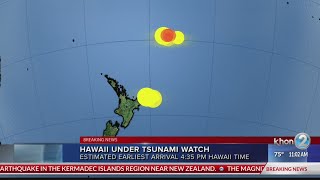
The Pacific is home to the "Ring of Fire," a region of intense volcanic and seismic activity. For example, a massive magnitude 8.8 earthquake striking off Russia's Pacific coast can send energy rippling across the entire ocean. When an event of this magnitude occurs, the PTWC immediately analyzes the depth and location of the epicenter to determine if the vertical displacement of the seafloor was sufficient to trigger a tsunami.
In the event of a massive quake in the North Pacific, Hawaii may be placed under a watch while experts calculate the estimated time of arrival (ETA) for the waves. Because Hawaii is thousands of miles from many of these epicenters, there is often a window of several hours between the initial earthquake and the arrival of the first wave, allowing for organized evacuation.
Where to Find Real-Time Tsunami Information
During a potential crisis, misinformation can spread quickly on social media. To find out if there is currently a tsunami watch in Hawaii, rely exclusively on the following sources:
- Pacific Tsunami Warning Center (PTWC): The primary authority for tsunami alerts in the Pacific.
- National Weather Service (NWS): Provides localized alerts and weather-related warnings for the Hawaiian Islands.
- Hawaii Emergency Management Agency (HI-EMA): Coordinates the state's response and triggers the outdoor siren system.
- Local News Outlets: Verified local broadcasters typically relay official government mandates.
What to Do During a Tsunami Watch in Hawaii
If you discover that Hawaii is under a tsunami watch, you should not panic, but you should prepare. Taking the following steps can save lives:
Stay Informed: Keep a battery-powered radio tuned to local emergency frequencies. Monitor official government websites and avoid relying on unverified livestreams or social media posts that may be outdated.
Identify Your Zone: Know if your home, hotel, or workplace is located in a Tsunami Evacuation Zone. Most coastal areas in Hawaii have designated evacuation routes leading to higher ground.
Prepare a Go-Bag: Ensure you have a bag packed with essential medications, water, non-perishable food, and important documents. If a watch is upgraded to a warning, you will need to leave your location immediately.
Listen for Sirens