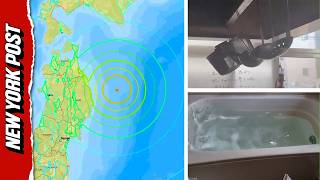
Is There A Tsunami Warning In Japan? How to Stay Informed
Japan is one of the most seismically active regions in the world, situated along the "Pacific Ring of Fire." Because of its geography, the country frequently experiences powerful offshore earthquakes that can trigger tsunami warnings. When residents or travelers ask, "Is there a tsunami warning in Japan?" it is critical to access real-time, official data to ensure safety.
Understanding Tsunami Warnings in Japan
The Japan Meteorological Agency (JMA) is the primary authority responsible for monitoring seismic activity and issuing tsunami alerts. Not every earthquake leads to a tsunami, but powerful offshore events—such as those occurring near the Sanriku Coast or off the northeast coast—increase the risk significantly.
Warnings are typically categorized by severity to help the public understand the level of threat:
- Tsunami Advisory: Issued when waves of up to 1 meter are expected. People are advised to leave the water and stay away from the coast.
- Tsunami Warning: Issued when waves between 1 and 3 meters are expected. Immediate evacuation to higher ground is recommended for coastal areas.
- Major Tsunami Warning: Issued when waves exceed 3 meters. This indicates a high risk of significant coastal flooding and destruction, requiring urgent evacuation to high-altitude areas.
Common Triggers for Tsunami Alerts
Tsunami warnings are often triggered by high-magnitude earthquakes occurring under the ocean floor. For example, historical data shows that powerful earthquakes, such as those reaching magnitude 7.4 or 7.5 off the northern coast, can displace massive amounts of water, sending surges toward the shoreline.
It is important to note that not all threats originate within Japanese waters. Seismic activity in neighboring regions, such as earthquakes in Russia, can also trigger tsunami siren sounds across northern Japan as the displaced water travels across the Pacific.
How to Identify a Tsunami Warning
Japan utilizes a multi-layered communication system to ensure that everyone, including non-Japanese speakers, is alerted during an emergency.
1. Tsunami Warning Sirens
Coastal towns are equipped with loud, distinct sirens. If you hear a continuous, undulating siren sound while near the coast, it is a signal to move inland or to a designated evacuation building immediately.
2. Mobile Alerts and Software
The Japanese government sends "Emergency Alert" notifications to all compatible mobile phones within the affected area. These alerts often include a loud alarm and a text message in multiple languages. Additionally, specialized software like JQuake provides users with rapid seismic data and early warnings, allowing individuals to find cover before the strongest shaking begins.
3. Public Broadcasts
Television and radio stations will immediately interrupt regular programming to display a map of the affected coastlines, showing the expected wave heights and arrival times.
What to Do During a Tsunami Warning
If a warning is issued, every second counts. Follow these safety protocols:
- Move to Higher Ground: Do not wait to see the wave. Move inland or climb to the top floor of a reinforced concrete building.
- Avoid the Shoreline: Never go to the beach to watch a tsunami. By the time the water is visible, it is often too late to escape.
- Stay Away Until the "All Clear": Tsunami events consist of a series of waves. The first wave is rarely the largest. Stay in your safe zone until official authorities lift the warning.
- Monitor Tide Levels: In some cases, the tide may recede significantly before the wave hits. This is a natural warning sign to evacuate immediately.
Conclusion
While the prospect of a tsunami is daunting, Japan possesses some of the most advanced early-warning systems in the world. By staying vigilant, utilizing tools like JQuake, and respecting the sound of tsunami sirens, you