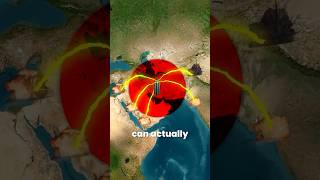
Iranian Long Range Missiles: Growing Regional Concern
The recent escalation of tensions in the Middle East has drawn renewed focus to Iran’s long‑range missile capabilities. Over the past few years Tehran has invested heavily in developing and testing advanced missile systems, prompting alarm among regional neighbors and global powers alike.
Background of Iran’s Missile Program
Iran’s missile development dates back to the 1980s, when the country began reverse‑engineering foreign technology. The government consistently frames the program as a defensive measure intended to deter aggression from hostile states. Nevertheless, the expanding range and sophistication of its missiles have raised questions about the true scope of Tehran’s strategic intentions.
Recent Military Activity
In the past month, several incidents have highlighted the volatile security environment:
- US Central Command (CENTCOM) announced that US forces struck three sites in Iraq and Syria used by Iranian‑backed militia groups. The strikes were a direct response to attacks on US personnel.
- Israel reported that eight civilians were killed in overnight attacks carried out by Iranian‑aligned militants, underscoring the ongoing proxy conflict.
- A video that surfaced online appears to show a ballistic missile launch from an Iranian test range, illustrating the operational status of newer missile types.
Key Long‑Range Missile Systems
Iran’s most notable long‑range missiles include:
- Shahab‑3 – a liquid‑fuel, medium‑range ballistic missile with an estimated range of 1,000–2,000 km.
- Sejjil‑2 – a solid‑fuel, two‑stage missile capable of reaching up to 2,500 km, allowing it to strike deep into the Middle East and parts of Europe.
- Hoveizeh – a newer cruise‑missile platform that can be launched from ground, sea, or air platforms, extending Iran’s strike flexibility.
These systems give Iran the ability to target locations far beyond its borders, including US bases in the region, Israeli cities, and strategic assets in the Persian Gulf.
Regional Reactions
Neighboring states have voiced strong concerns about the expanding missile threat:
- Israel has repeatedly warned that Iranian missiles pose an existential risk and has accelerated development of its own missile‑defense architecture, such as the Iron Dome and David’s Sling systems.
- Saudi Arabia and the United Arab Emirates have called for greater international scrutiny of Iran’s missile tests, fearing a destabilizing arms race.
- Gulf Cooperation Council (GCC) members have sought closer security coordination with the United States to counter potential missile strikes.
International Diplomatic and Economic Measures
The global community has responded with a mix of sanctions and diplomatic outreach:
- The United States has imposed targeted sanctions on Iranian entities and individuals involved in missile development, aiming to limit access to critical components.
- The European Union has urged Tehran to halt further testing and to engage in confidence‑building measures that could reduce regional tensions.
- United Nations discussions continue, though consensus on concrete actions remains elusive due to differing geopolitical interests.
Potential Future Scenarios
Looking ahead, several outcomes are possible:
- Continued Development – Iran may keep advancing its missile technology, potentially adding hypersonic glide vehicles or longer‑range variants.
- Escalation of Proxy Conflict – More frequent missile launches could be used to support allied militias in Lebanon, Iraq, or Yemen, increasing the risk of broader confrontation.
- Diplomatic Breakthrough – A negotiated agreement, possibly linked to nuclear talks, could impose verifiable limits on missile testing.
Conclusion
Iranian long‑range missiles represent a complex security challenge. While Tehran maintains that its missile program is purely defensive, the capability to strike targets across the Middle East and into Europe cannot be ignored. Recent US strikes, Israeli casualty reports, and publicly released launch footage all point to a missile force that is both operational and evolving.
Addressing this issue will require a balanced approach that combines diplomatic engagement, targeted sanctions, and reinforced defensive measures by affected states. Only through coordinated international effort can the risk of a missile‑driven escalation be mitigated, helping to preserve stability in an already volatile region.