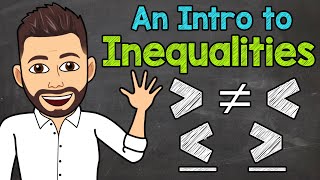
Understanding Inequalities Signs: A Comprehensive Guide
In mathematics, we often encounter situations where two values are not equal. Instead of using an equals sign to show balance, we use inequalities signs to describe the relationship between two numbers, variables, or expressions. Whether you are solving basic algebra problems or analyzing complex data sets, understanding how to read and manipulate these symbols is essential.
What are Inequality Signs?
Inequality signs are mathematical symbols used to compare two values. They indicate whether one value is greater than, less than, or potentially equal to another. Unlike an equation, which has one specific solution, an inequality typically describes a range of possible solutions.
Common Inequality Symbols and Their Meanings
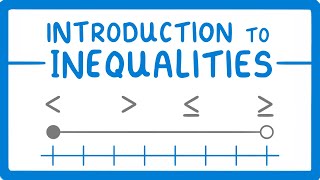
To master inequalities, you must first be able to identify and read the symbols correctly. Here are the most common inequality signs used in mathematics:
- < (Less Than): This symbol indicates that the value on the left is smaller than the value on the right. For example, 3 < 5.
- > (Greater Than): This symbol indicates that the value on the left is larger than the value on the right. For example, 10 > 2.
- ≤ (Less Than or Equal To): This symbol means the value on the left is either smaller than or exactly equal to the value on the right.
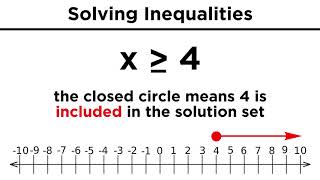
- ≥ (Greater Than or Equal To): This symbol means the value on the left is either larger than or exactly equal to the value on the right.
- ≠ (Not Equal To): This symbol is used to state that two values are simply different, regardless of which one is larger.
How to Read Inequality Signs
A common challenge for students is remembering which direction the symbol points. A helpful tip is to imagine the inequality sign as an alligator's mouth. The "alligator" always wants to eat the larger number. Therefore, the open side of the symbol always faces the larger value, while the pointed end faces the smaller value.
When reading an expression like x > 7, you read it from left to right as "x is greater than seven." If the expression is 5 < y, you read it as "five is less than y."
When to Flip the Inequality Sign
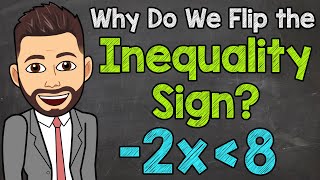
One of the most critical rules in algebra involves knowing when to change, flip, or reverse the direction of the inequality sign. If you perform an operation that changes the relative order of the numbers, the sign must be flipped to keep the statement true.
There are three primary times when you need to flip the sign:
- Multiplying or Dividing by a Negative Number: This is the most common rule. If you multiply or divide both sides of an inequality by a negative number, you must reverse the sign. For example, if you have -2x < 10 and divide both sides by -2, the sign flips to become x > -5.
- Swapping the Sides of the Inequality: If you decide to rewrite the inequality so that the variable is on the right instead of the left, the sign must flip. For instance, 5 < x is the exact same statement as x > 5.
- Taking the Reciprocal of Both Sides: In advanced algebra, if you take the reciprocal (flip the fraction) of both sides of an inequality where both sides have the same sign, the inequality sign must be reversed.
Practical Applications of Inequalities
Inequalities are not just theoretical; they are used daily in real-world scenarios to define limits and constraints. Some common examples include:
- Speed Limits: A posted speed limit of 65 mph means your speed (s) must be