How to Play Minesweeper: A Complete Beginner’s Guide
Hey guys, in today’s video I’ll be teaching you how to master Minesweeper, the timeless puzzle game that mixes logic, pattern‑recognition, and a little bit of luck. Whether you’ve never opened a grid before or you’re looking to sharpen your technique, this guide covers the rules, basic controls, common patterns, and proven strategies so you can clear every board with confidence.
What Is Minesweeper?
Minesweeper is a single‑player puzzle that appears on most computers and many mobile devices. The game presents a rectangular grid of hidden squares. Some of those squares conceal mines; the rest are safe. Your goal is to uncover every safe square without clicking on a mine. When you reveal a safe square, a number appears indicating how many mines are touching that square horizontally, vertically, or diagonally.
Setting Up a Game
- Open the Minesweeper application or launch the online version.
- Select a difficulty level. The classic options are:
- Beginner – 9 × 9 grid with 10 mines
- Intermediate – 16 × 16 grid with 40 mines
- Expert – 30 × 16 grid with 99 mines
- Click any square to start. The first click is always safe; the game will generate a mine‑free area around it.
Basic Controls
- Left‑click – Reveals the content of a square.
- Right‑click – Places a flag on a square you suspect contains a mine. Right‑click again to change the flag to a question mark, then back to an unmarked square.
- Double‑click (or middle‑click) on a revealed number – If the correct number of flags surrounds that number, all remaining adjacent squares are automatically cleared.
Understanding the Numbers
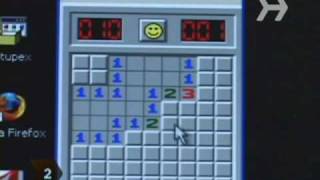
Each revealed number tells you exactly how many mines touch that square. For example, a “3” means three of the eight surrounding squares contain mines. Use these clues to deduce safe squares and to locate mines.
First Moves and Safe Zones
Because the initial click never hits a mine, it creates a “safe zone” of empty squares that spread outward until they meet numbered squares. Starting in the middle of the board usually gives the largest safe zone, providing the most information for your next moves.
Common Patterns and Their Solutions
Experienced players recognize a handful of recurring patterns. Learning these can dramatically reduce guesswork.
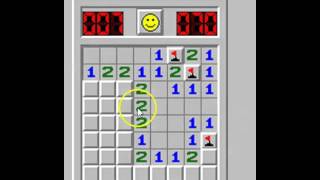
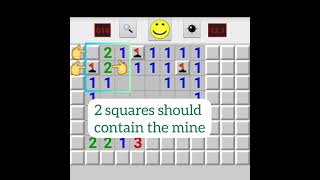
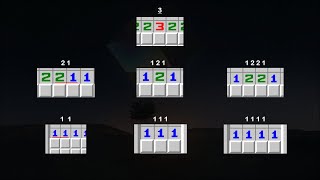
- 1‑1‑2 – When two “1”s sit next to each other with a “2” beside them, the two squares opposite the “2” are mines.
- 1‑2‑1 – The squares directly above and below the “2” are mines.
- 3‑1‑2 – Often indicates a “corner” mine configuration; the three squares touching the “3” and the single square touching the “1” are mines.
- 4‑corner – In a 2 × 2 block of “1”s surrounding a hidden square, that hidden square must be a mine.
For a visual reference of these patterns, see the pattern solutions image. Studying the diagram will help you spot these configurations quickly during play.
Step‑by‑Step Playthrough
- Open the board and make your first click in the center.
- Read the numbers that appear around the cleared area.
- Mark obvious mines with right‑click flags based on the numbers.
- Clear safe squares by left‑clicking any unmarked squares that cannot be mines according to the current clues.
- Use double‑click on a number once the correct amount of flags surrounds it to automatically reveal the remaining adjacent squares.
- Repeat the process, constantly updating your mental map of where mines could be.
- Finish when every non‑mine square is revealed. The game will display a congratulatory message and your completion time.
Advanced Tips for Faster Play
- Work from the edges inward. Edge squares have fewer neighbors, making the logic simpler.
- Use the “question mark” flag. When you’re unsure, a question mark reminds you to revisit that square later.
- Practice the “1‑2‑1” and “1‑1‑2” patterns. Mastering these two solves a large percentage of beginner boards.
- Watch the timer. Speed improves with familiarity; aim to beat your previous best without sacrificing accuracy.
- Learn from mistakes. When you hit a mine, pause the game, review the board, and identify the mis‑step. This reflection builds intuition.
Audio and Visual Learning Aids
If you prefer a spoken walkthrough, the main guide video walks you through a full game, explaining each decision out loud while highlighting the board. The video’s visual cues match the patterns described above, making it an excellent supplement to the written guide.
Common Pitfalls to Avoid
- Random guessing. Only guess when the board truly forces a 50/50 situation; otherwise, keep searching for logical deductions.
- Over‑flagging. Placing too many flags can obscure the numbers you need to solve the puzzle.
- Ignoring edge cases. Some patterns only appear on the board’s border; treat them with the same logical rigor as interior patterns.
Conclusion
Minesweeper remains a rewarding challenge because it blends simple rules with deep logical depth. By learning the basic controls, mastering common patterns, and applying the strategies outlined above, you’ll be able to clear beginner boards confidently and progress to the more demanding expert levels. Remember to practice, watch the pattern‑solution image, and refer to the video guide for visual reinforcement. Happy sweeping!