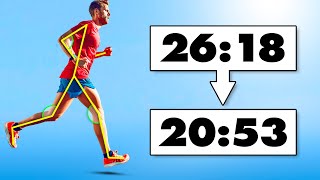
How To Improve Vertical Ratio Running: A Comprehensive Guide
In the world of running mechanics, efficiency is the difference between hitting a plateau and breaking a personal record. One of the most critical, yet often overlooked, metrics in running economy is the vertical ratio. Understanding how to improve your vertical ratio can help you stop wasting energy and start moving forward more effectively.
What is Vertical Ratio in Running?
Vertical ratio, often discussed alongside vertical oscillation, refers to the amount of vertical bounce in a runner's stride relative to their stride length. While some vertical movement is natural and necessary for the gait cycle, excessive bouncing indicates that energy is being directed upward rather than forward.
When your vertical ratio is too high, you are essentially fighting gravity with every step. This increases the impact force on your joints and consumes oxygen and glycogen that should be used for propulsion. Improving this ratio means minimizing unnecessary vertical displacement to maximize horizontal velocity.
Key Strategies to Improve Your Vertical Ratio
Reducing vertical oscillation requires a combination of strength training, technique adjustments, and mindful practice. Here are the most effective ways to refine your form.
1. Increase Your Cadence
One of the fastest ways to lower your vertical ratio is to increase your steps per minute (SPM). A slow cadence often leads to "overstriding," where the foot lands too far in front of the center of mass, creating a braking effect and forcing the body to bounce higher to clear the ground.
- Aim for 170–180 SPM: While this isn't a strict rule for everyone, increasing your current cadence by 5% to 10% can significantly reduce vertical bounce.
- Shorten your stride: Focus on taking quicker, lighter steps. This keeps your center of gravity stable.
2. Optimize Your Lean
Gravity is a powerful tool if used correctly. Many runners remain too upright, which pushes their energy vertically. By implementing a slight forward lean from the ankles (not the waist), you shift your center of mass forward.
A proper lean allows gravity to pull you into your next stride, converting potential energy into forward momentum. This reduces the need to "push off" vertically to move forward.
3. Focus on Knee Drive and Foot Strike
Where and how your foot hits the ground dictates your vertical ratio. Landing heavily on the heel often creates a jarring upward force.
- Midfoot Strike: Aim to land with your foot directly underneath your hips. This minimizes the braking force and reduces the vertical arc of your stride.
- Controlled Knee Drive: Ensure your knees are driving forward rather than upward. Imagine running underneath a low ceiling; this mental cue helps keep your trajectory horizontal.
4. Strengthen the Posterior Chain
Efficiency is not just about technique; it is about the strength to maintain that technique under fatigue. When your glutes and core tire, your form collapses, and vertical oscillation typically increases.
- Glute Bridges and Squats: Strong glutes provide the power needed for horizontal propulsion.
- Core Stability: A strong core prevents the hips from dropping or swaying, which keeps the torso stable and reduces wasted vertical movement.
- Plyometrics: Incorporate jumping rope or box jumps to improve tendon stiffness, allowing you to "spring" forward more efficiently.
Monitoring Your Progress
Improving your vertical ratio is a gradual process. To track your progress, consider using a wearable running sensor or a smartwatch that measures vertical oscillation. Look for a steady decrease in vertical oscillation while maintaining or increasing your pace.
If you are unsure about your form, working with coaches and sponsored athletes can provide real-time feedback. Video analysis is particularly helpful, as it allows you to see the "bounce" in your stride that you cannot feel while running.
Final Thoughts on Running Economy
Improving your vertical ratio