How to Improve Reflexes and Reaction Time in Badminton
If you want to dominate the court, the ability to have quick reflexes and fast reaction time is non‑negotiable. Badminton is a sport where a shuttle can travel over 300 km/h, and a split‑second delay can turn a winning point into a lost rally. Below you will find a complete, step‑by‑step guide that combines on‑court drills, off‑court training, and mental preparation to help you sharpen your reflexes and boost reaction speed.
Why Reflexes Matter in Badminton
Reflexes are the automatic, involuntary responses that protect you from injury and help you react to sudden stimuli. Reaction time, on the other hand, measures how long it takes you to consciously respond after a stimulus is perceived. In badminton, both are essential for:
- Returning fast drives and smashes.
- Anticipating opponent’s shot direction.
- Maintaining balance during rapid footwork.
- Executing deceptive shots without hesitation.
Improving these skills reduces the time between seeing the shuttle and moving your racket, giving you a clear advantage over opponents who rely solely on technique.
Eye / Brain Training Exercises Designed to Speed Up Processing
Before you step onto the court, train the visual‑cognitive system that feeds your reflexes. The following exercises can be done at home or in a gym and require only a few minutes each day.
- Dynamic Focus Shifts – Place a small ball on a string 1 m away. Swing the ball side‑to‑side while you keep your eyes fixed on it, then quickly shift focus to a distant wall clock. Repeat 10 times. This trains rapid accommodation and improves tracking of fast shuttle trajectories.
- Reaction Ball Drills – Use a rubber reaction ball that bounces unpredictably. Drop it from shoulder height and catch it after the first bounce. The erratic bounce forces your brain to process visual cues instantly, sharpening reflex pathways.
- Light‑Flash Coordination – Set up a series of LED lights (or a smartphone app) that flash in random order. As each light illuminates, tap a corresponding button as fast as possible. This mimics the sudden appearance of a shuttle and improves hand‑eye synchronization.
These eye/brain drills are the foundation of faster on‑court reactions because they enhance the speed at which visual information reaches the motor cortex.
On‑Court Drills That Build Reflex Speed
Once your visual system is primed, translate that speed into badminton‑specific movements. The drills below focus on footwork, racket positioning, and shot anticipation.
- Shadow Footwork with Random Commands – Have a partner call “forehand,” “backhand,” “net,” or “smash” at random intervals while you move to the appropriate position without a shuttle. The unpredictability forces you to react instantly to verbal cues, mirroring real‑match situations.
- Multi‑Shuttle Feed – Position three shuttles at the forehand, backhand, and mid‑court. A coach or training partner feeds them in rapid succession, alternating sides. Your goal is to return each shuttle with a controlled stroke before the next one arrives.
- Net Reflex Wall – Stand close to a practice wall and use a light shuttle or foam ball. Hit the shuttle against the wall and react to the rebound, aiming to keep the rally going for at least 30 seconds. The short distance and fast rebound simulate net exchanges.
These drills should be performed 2–3 times per week, with each session lasting 15–20 minutes. Consistency is key; the nervous system adapts best to repeated, high‑intensity stimulus.
Strength and Agility Work for Faster Movement
Reflexes are only as good as the muscles that execute them. Incorporate the following strength and agility exercises to create a powerful, responsive base.
- Ladder Drills – Perform in‑and‑out, lateral shuffle, and single‑foot hops on an agility ladder. Focus on quick foot placement and minimal ground contact time.
- Explosive Plyometrics – Box jumps, squat jumps, and lateral bounds develop fast‑twitch muscle fibers essential for rapid direction changes.
- Core Stability – Plank variations, Russian twists, and medicine‑ball throws improve trunk control, allowing you to generate power while maintaining balance during fast reactions.
Schedule these sessions on non‑drill days to avoid overtraining. A balanced routine of cardio, strength, and flexibility ensures you stay injury‑free while gaining speed.
Incorporating Video Analysis
Seeing yourself in action is a powerful feedback tool. Record a practice session and review it with a coach or a knowledgeable friend. Look for moments where you hesitated or moved late. Identify patterns—such as always reacting slower to backhand smashes—and target those with specific drills.
Remember, the goal of video analysis is not to criticize but to create a clear action plan. Write down 2–3 concrete adjustments and revisit the footage after a week to measure progress.
Putting It All Together: A Sample Weekly Plan
Below is a balanced schedule that blends eye/brain training, on‑court drills, strength work, and recovery.
- Monday – Eye/brain exercises (15 min) + Ladder drills (20 min)
- Tuesday – Multi‑shuttle feed drill (30 min) + Core workout (15 min)
- Wednesday – Light‑flash coordination (15 min) + Restorative stretching
- Thursday – Shadow footwork with random commands (30 min) + Plyometrics (20 min)
- Friday – Net reflex wall (20 min) + Video analysis (15 min)
- Saturday – Full match play focusing on quick reactions + Light cardio
- Sunday – Active recovery (yoga or easy jog) + Review weekly progress
Adjust the volume based on your fitness level and competition schedule. The most important factor is consistency; even short daily sessions produce measurable gains over a few weeks.
Motivation and Community Support
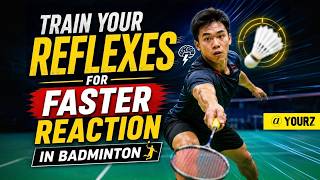
Staying motivated can be challenging, but connecting with a community helps. This video breaks down exactly how each drill improves your reflexes, and you can follow along with the step‑by‑step instructions. Hello guys, in this video I will tell you why the ability to have quick reactions is a game‑changer and demonstrate the drills you need.
For regular updates, new tutorials every Sunday at 7:00 am PST, and a supportive community of players, Subscribe to @olympics: http://oly.ch/Subscribe. Turn on notifications so you don’t miss any of the weekly lessons. ▷ FOR BUSINESS …
Final Thoughts
Improving reflexes and reaction time in badminton is a multi‑faceted process that blends visual‑cognitive training, sport‑specific drills, strength and agility work, and thoughtful analysis. By following the structured plan above and staying consistent, you will notice faster footwork, sharper shot anticipation, and a more confident presence on the court.
Start today, track your progress, and watch your game transform.