How to Improve Eyesight With Keratoconus: A Comprehensive Guide
Keratoconus is a progressive thinning and bulging of the cornea that can turn a clear, dome‑shaped surface into a cone‑like irregularity. The result is distorted, blurry vision that often worsens over time. While the condition can be challenging, modern eye‑care offers several strategies—both non‑surgical and surgical—to help patients regain clearer sight and reduce dependence on glasses or contacts.
Understanding Keratoconus
Keratoconus typically appears in the late teens or early twenties and may progress for a decade or more before stabilizing. The cornea’s loss of structural integrity leads to:
- Irregular astigmatism (different from regular astigmatism caused by a uniformly shaped cornea)
- Increased light sensitivity and glare
- Frequent changes in prescription
Do you know the difference between astigmatism and keratoconus? Regular astigmatism is a predictable, symmetrical curvature error, whereas keratoconus creates an uneven, cone‑shaped surface that standard lenses cannot fully correct.
Traditional Management Options
Early‑stage keratoconus is often managed with:
- Glasses – Useful while the cone is small and vision changes are mild.
- Rigid gas‑permeable (RGP) or hybrid contact lenses – These lenses vault over the irregular cornea, providing a smoother refractive surface.
- Corneal cross‑linking (CXL) – A minimally invasive procedure that uses ultraviolet light and riboflavin to strengthen collagen fibers, slowing or halting disease progression.
When these measures no longer provide adequate vision, surgeons consider more advanced interventions.
Modern Surgical Solutions: Intracorneal Ring Segments
One of the most exciting developments in keratoconus care is the use of intracorneal ring segments—tiny, crescent‑shaped implants that look like hot dogs and they flatten the shape of your cornea so that light can focus more accurately on the retina.
These rings are inserted into a shallow tunnel created within the corneal stroma. By exerting outward pressure, they reshape the cornea, reducing the cone’s steepness and improving visual acuity.
Procedure Overview- Pre‑operative mapping – Advanced topography and tomography identify the exact location and thickness of the cone.
- Tunnel creation – A femtosecond laser or manual technique creates a precise channel at a depth of 70–80% of the corneal thickness.
- Ring insertion – The surgeon places one or two segments, aligning them to the steepest meridian. ... to set we Mark where the top of my lens will be perfect and let us take that out wow so much, ensuring optimal positioning.
- Recovery – Most patients resume normal activities within a few days, with vision stabilizing over several weeks.
Benefits include:
- Improved uncorrected visual acuity, often reducing the need for glasses.
- Minimally invasive with a short outpatient procedure.
- Reversible—segments can be removed or exchanged if needed.
Potential risks are low but may involve infection, corneal haze, or temporary glare. Proper post‑operative care and regular follow‑up minimize these concerns.
This Groundbreaking Procedure Has Reduced the Need for Transplants and Transformed Countless Lives! Click for More …
Because intracorneal rings can restore functional vision in many patients, the frequency of full‑thickness corneal transplants has declined dramatically. Modern surgeons now reserve transplantation for advanced cases where the cornea is too thin or scarred for other interventions.
Other Emerging Therapies
Beyond ring segments, several cutting‑edge options are expanding the keratoconus toolbox:
- Topography‑guided photorefractive keratectomy (PRK) – Uses detailed corneal maps to selectively reshape the surface, complementing CXL.
- Corneal onlays and lenticule implantation – Thin layers of donor tissue are placed within the cornea to add thickness and regularity.
- Customized wavefront‑guided contact lenses – Tailored to the individual’s aberrations, offering sharper vision than standard RGP lenses.
Lifestyle Tips to Support Vision
While medical treatment is essential, everyday habits can help maintain the best possible vision:
- Protect your eyes from UV light – Wear sunglasses with 100% UV protection; UV exposure can accelerate corneal weakening.
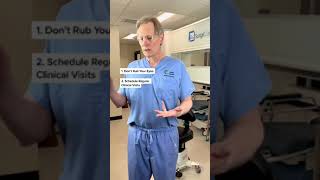
- Avoid eye rubbing – Mechanical trauma can worsen the cone’s shape.
- Stay hydrated and maintain a balanced diet – Adequate hydration supports corneal health.
- Schedule regular eye exams – Early detection of progression allows timely intervention.
Frequently Asked Questions
How does someone with keratoconus know if they are a candidate for ring segments? A thorough corneal topography, sufficient corneal thickness (usually >400 µm at the intended tunnel depth), and stable disease after cross‑linking are key criteria.
Can ring segments be combined with other procedures? Yes. Many surgeons perform cross‑linking first to stabilize the cornea, then insert rings to improve shape, and may follow with topography‑guided PRK for fine‑tuning.
Will my vision stay improved forever? The rings provide a lasting reshaping effect, but keratoconus can still progress slowly. Ongoing monitoring ensures any changes are addressed promptly.
Conclusion
Improving eyesight with keratoconus is no longer limited to glasses, contacts, or high‑risk transplants. Modern interventions—especially intracorneal ring segments that flatten the cornea—offer a safe, effective way to regain clearer vision and enhance quality of life. By understanding the disease, staying informed about emerging treatments, and adopting protective lifestyle habits, patients can take proactive steps toward better sight. If you suspect keratoconus or are experiencing rapid vision changes, schedule an appointment with an experienced cornea specialist to explore the most appropriate options for your eyes.