How to Calculate RMC Concrete: A Comprehensive Guide
Ready-Mix Concrete (RMC) is a prefabricated concrete mix delivered to construction sites via transit mixers. Because RMC is purchased by volume, calculating the exact quantity needed is critical to avoid project delays or costly waste. Whether you are working on a residential driveway or a large-scale commercial slab, understanding how to calculate RMC concrete ensures budget accuracy and structural integrity.
Understanding the Basics of Concrete Volume
Concrete is measured in cubic units (cubic feet, cubic yards, or cubic meters). To determine the total amount of RMC required, you must calculate the volume of the space you intend to fill. The fundamental formula for volume is:
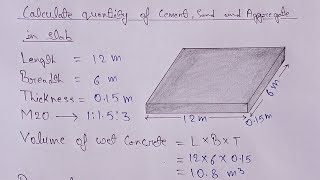
Volume = Length × Width × Thickness (or Depth)
Before starting your calculations, ensure all measurements are converted to the same unit. For example, if your length and width are in feet but your thickness is in inches, you must convert the inches into feet by dividing by 12.
Step-by-Step Guide to Calculating Concrete Quantity
1. Measure the Dimensions
Use a measuring tape to find the precise length and width of the area. For irregular shapes, break the area down into smaller, manageable rectangles or circles. Once you have the surface area, measure the thickness of the slab as specified in your engineering plans.
2. Apply the Volume Formula
For a standard rectangular slab, multiply the three dimensions.
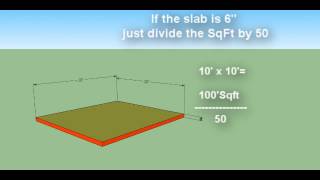
- Example: A slab that is 20 feet long, 10 feet wide, and 4 inches (0.33 feet) thick.
- Calculation: 20 ft × 10 ft × 0.33 ft = 66 cubic feet.
3. Convert to Cubic Yards or Meters
RMC plants typically sell concrete by the cubic yard (in the US) or cubic meter (internationally).
- To get Cubic Yards: Divide the total cubic feet by 27 (since 1 cubic yard = 27 cubic feet).
- Calculation: 66 / 27 = 2.44 cubic yards.
Calculating Concrete for Different Structural Elements
Not every project is a flat slab. Different civil works require specific formulas:
Columns and Beams
Columns are typically rectangular or cylindrical. For rectangular columns, use the standard Length × Width × Height formula. For cylindrical columns, use the formula: π × radius² × height.
Footings
Footings are often deeper than slabs. Ensure you account for the exact depth of the excavation to avoid under-ordering, as footings often settle into uneven soil, which may require slightly more concrete than a theoretical calculation suggests.
Walls
For concrete walls, calculate the surface area of the wall (Length × Height) and multiply it by the thickness of the wall.
Accounting for Waste and Spillage
One of the most common mistakes in construction is ordering the exact theoretical volume. In real-world conditions, several factors can lead to concrete shortages:
- Formwork Deflection: The pressure of wet concrete can cause wooden forms to bulge slightly.
- Uneven Subgrade: If the ground is not perfectly level, some areas will be deeper than others.
- Spillage: A small amount of concrete is always lost during the pouring and leveling process.
To account for these variables, it is industry standard to add a waste factor of 5% to 10% to your final total. For the previous example of 2.44 cubic yards, adding 10% would mean ordering approximately 2.7 cubic yards.
Tips for Ordering from an RMC Plant
Once you