Has Uruguay Won a World Cup? A Legacy of Early Dominance
When discussing the pantheon of international football, few nations command as much historical respect as Uruguay. Despite its modest population, this South American powerhouse sits firmly among the elite when it comes to the FIFA World Cup. If you are asking, has Uruguay won a World Cup? the answer is a resounding yes—twice.
The Dawn of the FIFA World Cup
Uruguay's place in football history is cemented by its role in the very first FIFA World Cup. Held in 1930, the inaugural tournament was hosted by Uruguay to celebrate the centenary of the country’s first constitution. As the hosts, they did not just participate; they dominated.
Under the guidance of coach Alberto Suppici, the Uruguayan squad showcased a level of tactical sophistication and physical prowess that was ahead of its time. Led by iconic figures like José Andrade and Héctor Scarone, the team navigated the tournament with confidence. In the final, held at the Estadio Centenario in Montevideo, Uruguay defeated their neighbors, Argentina, with a score of 4-2. This victory established Uruguay as the first-ever world champions, a title that remains the cornerstone of the nation’s sporting identity.
The Miracle of Maracanã: 1950
Twenty years later, Uruguay achieved what is widely considered the greatest upset in the history of the sport. The 1950 FIFA World Cup, held in Brazil, featured a unique format where a final group stage determined the winner. Brazil, the heavy favorites, needed only a draw against Uruguay in the final match to secure the trophy.
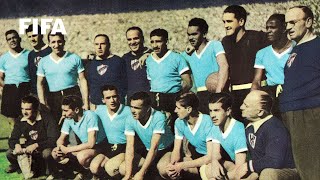
Played before a record-breaking crowd at the Maracanã Stadium in Rio de Janeiro, the match—famously dubbed the Maracanazo—defied all expectations. After falling behind early, Uruguay mounted a stunning comeback. Goals from Juan Alberto Schiaffino and Alcides Ghiggia silenced the massive home crowd, securing a 2-1 victory for Uruguay. This win earned the country its second World Cup title and remains one of the most celebrated achievements in global sports history.
Uruguay’s Modern World Cup Journey
While those two titles in the early-to-mid 20th century define their trophy cabinet, Uruguay has remained a persistent and formidable force in the modern era. The nation frequently qualifies for the tournament and often punches above its weight, reaching the semi-finals as recently as 2010.
The 2010 tournament in South Africa provided one of the most dramatic moments in recent memory. The world will never forget Luis Suarez's handball and Asamoah Gyan's penalty miss in this famous FIFA World Cup quarter-final match. It was a high-stakes encounter that showcased the grit and controversial brilliance that often characterizes the Uruguayan style of play.
Why Uruguay Wears Four Stars
Observant fans often notice that the Uruguayan national team jersey features four stars above the crest, despite the team winning only two FIFA World Cups. This is a point of frequent debate in football circles. Uruguay includes two stars for their 1930 and 1950 World Cup victories, but they also include two stars for their gold medal wins at the 1924 and 1928 Olympic Games. At the time, FIFA recognized these Olympic tournaments as world championships, as they predated the establishment of the official World Cup. While modern FIFA records distinguish between the two, the Uruguayan Football Association maintains that all four titles represent their status as world champions.
The Legacy of Uruguayan Football
Uruguay is a nation where football is woven into the social fabric. From the early artistry of legends like José Andrade to Héctor Scarone, HITC Sevens takes a look at how the country has consistently produced world-class talent despite its small size. Their history is not just about the trophies, but about the spirit of a team that has historically refused to be intimidated by larger, wealthier nations.
Whether they are competing in the Copa América or the