Spooky Math Activities to Boost Elementary Learning This Halloween
Halloween isn’t just about costumes and candy—it’s also a perfect backdrop for engaging math practice. By turning traditional lessons into themed challenges, teachers can capture the excitement of the season while reinforcing core concepts. Below you’ll find a variety of Halloween Activity Math ideas that work for 1st‑ and 2nd‑grade classrooms, plus tips for extending the fun at home.
1. Halloween Math Escape Game for Elementary Students
This interactive escape game transforms the classroom into a haunted forest where students must solve math puzzles to help Bearhead escape. Each correct answer unlocks a clue, and the final key reveals a “treasure chest” of virtual treats. The game aligns with common core standards for addition, subtraction, and simple multiplication, making it a seamless addition to any lesson plan.
- Setup: Print a series of clue cards with math problems on one side and spooky illustrations on the other.
- Play: Students work in pairs, solve each problem, and flip the card to reveal the next location.
- Goal: Reach the “safe zone” before the clock strikes midnight.
2. Pumpkin Fraction Station
Bring in real pumpkins or printable templates and ask students to cut them into halves, quarters, and eighths. Use the pieces to demonstrate fraction equivalence and addition. For example, two quarter‑pumpkin pieces combine to make a half‑pumpkin. This tactile activity reinforces visual‑spatial reasoning and can be adapted for any grade level.
- Draw a large pumpkin on chart paper.
- Label each slice with a fraction.
- Challenge students to create a whole using different fraction combinations.
3. Candy Count and Graphing
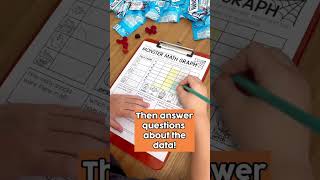
After a classroom “trick‑or‑treat” session, have students tally the types of candy they collected. Then guide them to create a simple bar graph or pictograph. This exercise practices data collection, organization, and interpretation—key skills for early statistics.
Example prompt: How many pieces of chocolate did you receive compared to gummy worms? Students record their counts, draw bars, and discuss which candy was most popular.
4. Ghostly Number Patterns
Print a series of ghost silhouettes, each holding a number. Ask students to identify the rule governing the sequence and predict the next three ghosts. Patterns such as “add 2,” “multiply by 2,” or “alternating +1 and –1” help reinforce algebraic thinking before formal algebra is