Understanding the Geometry Town Project: A PBL Approach to Mathematics
The Geometry Town Project is a comprehensive Project-Based Learning (PBL) assignment designed to bridge the gap between theoretical mathematics and real-world application. By tasking students with the creation of a fictional town, this project transforms abstract geometric concepts into tangible architectural elements, fostering a deeper understanding of spatial relationships and mathematical precision.
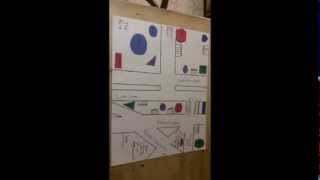
At its core, the project requires students to design and construct a map of a town where every building, road, and landmark is defined by specific geometric properties. This process encourages students to move beyond rote memorization and instead apply their knowledge to a creative, multi-dimensional challenge.
The Core Objectives of the Project
The primary goal of the Geometry Town Project is to demonstrate mastery of geometry through design. Instead of completing a traditional exam, students prove their competency by integrating various mathematical requirements into a cohesive urban layout. Key learning objectives typically include:
- Identification of Polygons: Using squares, rectangles, trapezoids, and irregular polygons to create building footprints.
- Application of Angles: Implementing acute, obtuse, right, and straight angles through the design of street intersections and rooflines.
- Understanding Parallel and Perpendicular Lines: Organizing the town grid to showcase lines that never meet and lines that intersect at exact 90-degree angles.
- Calculating Area and Perimeter: Determining the total square footage of city blocks and the length of fencing or curbs required for specific zones.
The Step-by-Step Process of Creating Geometry Town
Creating a successful Geometry Town requires a structured approach. The process generally follows a sequence of planning, drafting, and final execution to ensure all mathematical requirements are met.
1. Planning and Blueprinting
Before drawing the final map, students must create a legend or a requirement checklist. This stage involves brainstorming which real-world structures correspond to specific geometric shapes. For example, a city hall might be a large rectangle with a triangular pediment, while a park might be designed as a perfect circle or a complex hexagon.
2. Drafting the Town Grid
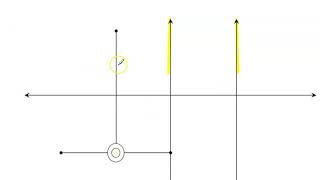
Using rulers and protractors, students begin by laying out the transportation network. This is where the concept of parallel and perpendicular lines becomes critical. Main thoroughfares are often drawn as parallel lines, while side streets create perpendicular intersections. This phase teaches students how to maintain scale and precision across a large surface.
3. Constructing the Architecture
Once the grid is established, students populate the map with buildings. Each structure must adhere to the project guidelines. For instance, a student might be required to include:
- Three buildings with at least one obtuse angle.
- A residential area where all houses are congruent parallelograms.
- A commercial zone featuring a variety of quadrilateral shapes.
4. Final Calculations and Documentation
The final phase of the project involves the mathematical justification of the design. Students often produce a "Town Directory" or an explanation document. In this report, they list each landmark and describe the geometric properties used to create it, often calculating the perimeter and area of their most prominent buildings.
The Benefits of Project-Based Learning in Geometry
The PBL nature of the Geometry Town Project offers several pedagogical advantages over traditional worksheets. First, it promotes critical thinking; students must solve spatial problems, such as how to fit a circular fountain inside a square plaza without overlapping boundaries.
Second, it encourages visual and tactile learning. By physically drawing and measuring their town, students develop a stronger intuition for how angles and lines interact in a physical environment. Finally, it provides a sense of ownership. When students are the "architects" of their own town, they are more engaged in the learning process and more likely to retain the information long-term.
Tips for Student Success
To excel in the Final Project-Geometry Town, students should focus on the following:
- Precision: