Mastering Geometry with Cornell Notes
Geometry is a unique branch of mathematics that blends logical reasoning, visual spatialization, and rigorous proofs. For many students, the challenge lies in organizing these disparate elements—definitions, diagrams, and theorems—into a cohesive study guide. Geometry Cornell Notes provide a structured framework that transforms passive note-taking into an active learning process, making it an ideal system for students, parents, and teachers.
What are Cornell Notes?
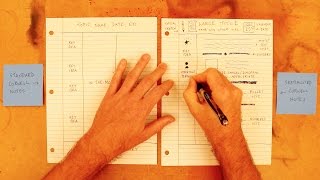
Cornell Notes are a systematic format for condensing and organizing notes. Developed by Walter Pauk at Cornell University, the method divides a single piece of paper into three distinct sections: a narrow left-hand column for cues, a wide right-hand column for detailed notes, and a horizontal summary block at the bottom.
In the context of Geometry, this layout is particularly effective because it allows students to separate the how (the steps of a proof) from the why (the geometric theorems supporting those steps).
How to Take Geometry Cornell Notes: A Step-by-Step Tutorial
Implementing this system requires a shift in how you approach your notebook. Follow these steps to optimize your geometry study sessions:
1. The Note-Taking Column (Right Side)
During the lecture or while reading a textbook, use the wide right column to record the primary content. In Geometry, this should include:
- Definitions: Clear explanations of terms like isosceles triangles or transversal lines.
- Diagrams: Sketching shapes, angles, and coordinate planes. Visuals are critical in geometry; never rely solely on text.
- Step-by-Step Proofs: Writing out the logical flow of a geometric proof, including statements and reasons.
- Formulas: Highlighting key equations, such as the Pythagorean theorem or the area of a sector.
2. The Cue Column (Left Side)
After the lesson, review your notes and use the left column to create "cues." This is where the active learning happens. Instead of copying the notes, write:
- Keywords: Terms that trigger your memory of the larger concept.
- Study Questions: Transform a note into a question. For example, instead of writing "Alternate Interior Angles," write "What are the properties of alternate interior angles?"
- Formula Labels: Quick identifiers for which formula to use in specific scenarios.
3. The Summary Section (Bottom)
At the end of the page, write a 2–3 sentence summary of the entire lesson in your own words. For Geometry, focus on the "Big Idea." For instance: "Today we learned that if two parallel lines are cut by a transversal, the corresponding angles are equal, which allows us to solve for unknown variables in complex diagrams."
Why This Method Works for Geometry Finals
Many students report significant improvements in their test scores when switching to Cornell Notes for their geometry finals. The reason is simple: active recall. Instead of rereading a textbook—which creates an illusion of competence—students can cover the right-hand column and use the cues on the left to quiz themselves.
This method is especially potent for geometry because it forces the student to synthesize visual information with logical proofs. By the time the final exam arrives, the student has already "tested" themselves dozens of times through the cue-and-response system.
Tips for Teachers and Parents
For those supporting a student, encouraging the use of Cornell Notes can reduce study anxiety. Teachers can facilitate this by providing guided templates or dedicating the last five minutes of class to the "Summary" portion of the notes.
Parents can help by asking their children to "teach" a concept using only the cue column. If the student can explain the geometric principle based on a single keyword or question, they have achieved a level of mastery that simple memorization cannot provide.