The Role of Fraction Clip Art in Primary Math Learning
For students in primary math, transitioning from whole numbers to fractions can be a challenging leap. Fractions represent parts of a whole, a concept that is inherently abstract. To bridge the gap between theoretical numbers and real-world understanding, educators and parents often turn to fraction clip art. Visual aids transform complex equations into digestible images, making the learning process more intuitive and engaging.
Why Visuals Matter for Learning Fractions
Mathematics is often taught as a series of rules and formulas, but true mastery comes from conceptual understanding. Fraction clip art provides a concrete representation of these abstract ideas. When a child sees a circle divided into four equal parts with one shaded, they aren't just seeing a drawing; they are seeing the physical manifestation of 1/4.
Visual learning is particularly effective for several reasons:
- Immediate Comprehension: A picture of a sliced pizza or a divided chocolate bar communicates "parts of a whole" faster than a written definition.
- Pattern Recognition: By comparing different clip art images, students can visually recognize that 2/4 is the same size as 1/2, introducing the concept of equivalent fractions.
- Reduced Math Anxiety: Colorful and friendly graphics make math feel less intimidating and more like a puzzle or a game.
Types of Fraction Clip Art for Different Concepts
Not all fraction visuals are created equal. Depending on the lesson, different types of clip art are used to illustrate specific mathematical properties.
Area Models (Circles and Rectangles)
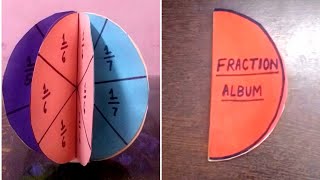
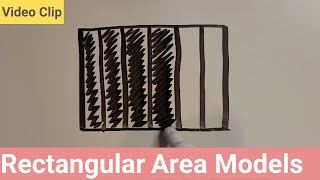
The most common form of fraction clip art involves circles (pie charts) and rectangles (bar models). These are ideal for introducing the basic definition of a fraction. For example, a circle divided into thirds helps a student understand the denominator (total parts) and the numerator (shaded parts).
Set Models (Groups of Objects)
Beyond single shapes, set models use groups of items—such as five stars where two are yellow and three are blue. This teaches students that fractions can apply to a group of separate objects, not just a single solid object. This is a crucial step in moving toward more advanced probability and ratio concepts.
Linear Models (Number Lines)
Clip art featuring number lines helps students understand that a fraction is a specific value located between 0 and 1. Visualizing the "jump" from 0 to 1/2 and then to 1 provides a spatial understanding of numerical value.
Integrating Visuals into Lesson Planning
To maximize the effectiveness of fraction clip art, it should be integrated thoughtfully into the curriculum. Many educators use a multi-step approach to ensure students aren't just memorizing images but are actually learning the math.
- Introduction: Use a large, clear image (like a whole apple) to introduce the concept of "one whole."
- Guided Practice: Use clip art worksheets where students color in specific fractions, moving from passive viewing to active participation.
- Comparison: Display two different images side-by-side (e.g., 1/3 of a circle vs. 1/4 of a circle) to prompt a discussion on which fraction is larger.
- Application: Encourage students to draw their own "clip art" to represent a fraction, reinforcing the connection between the number and the image.
Tips for Finding and Using High-Quality Math Visuals
When searching for fraction clip art, quality and accuracy are paramount. A visual that is not precisely divided can lead to misconceptions about equality and proportion.
What to look for:
- Precision: Ensure the segments are mathematically equal. If a "half" looks like a "third," the student will learn the wrong concept.
- Simplicity: Avoid overly cluttered images. The focus should be on the fraction, not the decorative elements around it.
- Consistency: