Fact Family Games: Turning Math Practice into Playful Learning
When children hear the word “math,” many picture worksheets, endless repetition, and a quiet classroom. Fact family games flip that script. By grouping related addition, subtraction, multiplication, or division facts into short, interactive activities, these games help students see the logical connections between numbers while having fun. The result is stronger fluency, higher confidence, and a genuine curiosity about how numbers work together.
Understanding Fact Families
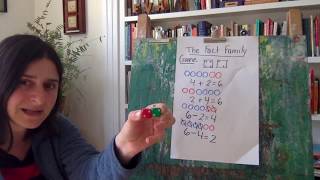
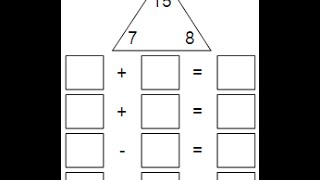
A fact family is a set of three numbers that can be combined in multiple ways using two basic operations. For example, the numbers 4, 5, and 9 belong to the same addition‑subtraction family:
- 4 + 5 = 9
- 5 + 4 = 9
- 9 − 4 = 5
- 9 − 5 = 4
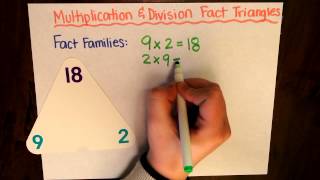
Similarly, 3, 6, and 18 form a multiplication‑division family:
- 3 × 6 = 18
- 6 × 3 = 18
- 18 ÷ 3 = 6
- 18 ÷ 6 = 3
Seeing these relationships side by side helps children internalize the “why” behind each fact, making recall faster and more reliable.
Why Fact Family Games Work
Research on elementary math instruction consistently highlights three key benefits of game‑based practice:
- Increased fluency. Repeated, low‑stakes exposure to the same numbers strengthens neural pathways, so facts become automatic.
- Improved confidence. Winning a round or completing a puzzle provides immediate positive feedback, encouraging students to keep trying.
- Deeper conceptual understanding. By manipulating the same numbers in different ways, learners grasp the inverse nature of operations (e.g., addition ↔ subtraction).
Because games are engaging, students often practice longer and with more enthusiasm than they would with traditional drills.
Popular Fact Family Game Formats
Card‑Based GamesSimple decks of numbered cards can be turned into a variety of challenges. “Fact Family War,” for instance, has two players draw three cards each and race to create the most complete family. “The Fact Family Game” uses a set of fact‑family cards that students match with corresponding equations on a worksheet. These activities require only a deck of cards and a little imagination, making them perfect for classroom centers or at‑home play.
Board and Dice GamesGames like “Fact Family Bingo” replace traditional numbers with fact families. As the teacher calls out an equation (e.g., “7 + 2”), students cover the matching family on their bingo cards. Another favorite is “The Cup,” a cup‑stacking game where each cup is labeled with a number; players must stack cups in an order that creates a valid fact family before the timer runs out.
Digital and App‑Based GamesTechnology adds instant scoring, adaptive difficulty, and vibrant visuals. Kids Academy offers a suite of fact‑family challenges that adapt to each child’s skill level, and thousands of parents and educators are turning to the app because it “makes real learning truly fun.” Numberock provides animated songs and interactive quizzes that let 1st‑ and 2nd‑grade teachers explore math concepts with a free month of access. Many YouTube channels also host “How well do you know your addition facts within 20?!” challenges that can be used as quick warm‑ups.
Integrating Fact Family Games into Daily Routines
- Start with a brief review. Use a quick “Fact Family Flash” where you call out one equation and ask students to state the related facts.
- Choose a game that matches the lesson. If you just taught multiplication, try “Fact Family War” with multiplication cards.
- Set clear goals. For example, “Each pair must create three complete families before moving on.” This keeps play focused and purposeful.
- Rotate stations. In a classroom, set up a card station, a digital station (Kids Academy), and a board‑game station (Bingo). Students rotate every 10‑15 minutes, keeping energy high.
- Reflect after play. Ask learners to write one new connection they discovered, reinforcing the conceptual link.
Top Resources for Fact Family Games
Below are vetted tools that align with the “fun and easy” approach to teaching math:
- Kids Academy – A subscription‑based learning app that includes a dedicated “Fact Families” module with animated characters, timed challenges, and progress tracking.
- Numberock – Offers free videos and printable worksheets; teachers can claim a free month of premium access for 1st‑ and 2nd‑grade classes.
- The Cup – A printable kit of cup‑based games that can be assembled in minutes; ideal for hands‑on manipulatives.
- Fact Family Card Sets – Available from educational supply stores; these decks come pre‑sorted by operation and difficulty level.
- YouTube Channels – Search for “addition facts within 20” challenges; many creators post interactive countdown videos that work well as class warm‑ups.
Tips for Teachers and Parents
To maximize the impact of fact family games, keep these best practices in mind:
- Keep the stakes low. The goal is practice, not competition. Celebrate effort as much as correct answers.
- Blend digital and physical. Switching between a tablet game and a hands‑on card activity maintains novelty.
- Personalize difficulty. Use adaptive apps like Kids Academy to ensure each child works at the right challenge level.
- Involve families. Send home a simple “Fact Family Card” activity so parents can join the fun during bedtime routines.
- Track progress. A quick chart on the wall showing which families have been mastered gives students a visual sense of achievement.
Conclusion
Fact family games transform rote memorization into an engaging exploration of number relationships. Whether you’re using a deck of cards, a cup‑stacking board, or a vibrant app like Kids Academy, the core idea remains the same: give children repeated, meaningful practice in a format they love. By weaving these games into daily lessons, teachers and parents can help students develop fluency, confidence, and a lasting love for math—all while having a great time together.