Mastering the Art of Editing a Paragraph
Writing a first draft is about getting ideas onto the page, but the real magic happens during the revision process. Editing a paragraph is not merely about correcting spelling errors; it is about refining the flow, strengthening the prose, and ensuring your message is delivered with maximum impact. Whether you are writing a novel, a business report, or an academic essay, polishing your paragraphs is essential for professional communication.
The Macro View: Structure and Flow
Before diving into individual words, it is helpful to take an "airplane view" of your paragraph. This means stepping back to look at the structural integrity of the text rather than the specific phrasing. A well-constructed paragraph should focus on a single main idea, supported by evidence or elaboration, and concluded with a transition to the next point.
When reviewing your paragraph from this perspective, ask yourself the following questions:
- Does the topic sentence clearly establish the main point?
- Do the supporting sentences logically follow the opening claim?
- Is there a clear beginning, middle, and end?
- Does the paragraph transition smoothly into the next section of the text?
Applying the COPS Strategy
For those seeking a systematic approach to editing, the COPS strategy is a highly effective tool. This acronym helps writers categorize their editing process into four distinct phases:
- Capitalization: Ensure all proper nouns, the start of every sentence, and titles are correctly capitalized.
- Organization: Check the layout of the paragraph. Are the ideas in a logical order? Is the paragraph too long (which can overwhelm the reader) or too short (which may leave the point underdeveloped)?
- Punctuation: Review commas, periods, semicolons, and quotation marks. Improper punctuation can change the entire meaning of a sentence or disrupt the reader's rhythm.
- Spelling: While spell-checkers are useful, they often miss homophones (e.g., "their" vs. "there"). Manual review is necessary for total accuracy.
Strengthening Your Prose
Once the structure and mechanics are sound, focus on the quality of the prose. Stronger writing is often achieved by removing clutter and choosing more precise language. To make your prose more engaging, consider these three common refinements:
1. Eliminate Redundancy
Many writers inadvertently repeat themselves within a single paragraph. For example, phrases like "added bonus" or "future plans" are redundant because a bonus is inherently added and plans are inherently for the future. Removing these redundancies makes your writing tighter and more professional.
2. Swap Passive Voice for Active Voice
Passive voice often makes a paragraph feel sluggish. Instead of writing, "The decision was made by the committee," try "The committee decided." Active voice creates a direct connection between the subject and the action, making the writing feel more energetic and decisive.
3. Vary Sentence Length
A paragraph composed entirely of short sentences feels choppy. Conversely, a paragraph consisting only of long, complex sentences can be exhausting. To create a natural cadence, mix short, punchy sentences with longer, more descriptive ones. This variation keeps the reader engaged and emphasizes key points.
The Power of Perspective
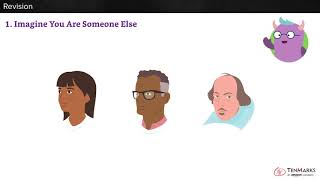
One of the most effective ways to edit a paragraph is to imagine you are someone else. When you have spent hours staring at your own writing, your brain automatically fills in gaps and ignores errors because it knows what you meant to say. By reading your work aloud or pretending to be a critical first-time reader, you can spot awkward phrasing and logical leaps that were previously invisible.
Continuing Your Writing Journey
Editing is a skill that improves with practice and mentorship. If you find yourself struggling to refine your prose or feeling stuck in the revision phase, joining a structured environment can accelerate your growth. For those aspiring to complete a larger project, the BOOK