Understanding the Earth's Spheres Worksheet: A Guide for Students
Understanding how our planet functions requires a deep dive into the complex interactions between different natural systems. To simplify this, scientists divide the Earth into four primary spheres. Using an Earth's Spheres Worksheet is one of the most effective ways for students to visualize these systems and observe the events that show how they overlap and influence one another.
What are the Four Spheres of Earth?
Before diving into worksheet activities, it is essential to define the four interconnected systems that make up our world. Each sphere represents a different set of materials and processes.
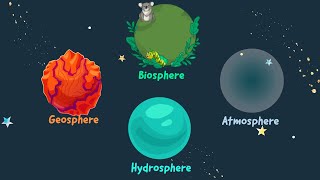
- The Geosphere: This includes all the rocks, minerals, and landforms on Earth. It encompasses everything from the molten core and the mantle to the solid crust and the mountains we climb.
- The Hydrosphere: This sphere comprises all the water on the planet. It includes oceans, rivers, lakes, glaciers, and even the moisture found in the air.
- The Atmosphere: This is the layer of gases surrounding the Earth. It provides the oxygen we breathe and protects the surface from harmful solar radiation.
- The Biosphere: This sphere includes all living organisms, from the smallest bacteria to the largest whales, and the environments they inhabit.
How to Use an Earth's Spheres Worksheet Effectively
A well-designed worksheet does more than ask for definitions; it encourages critical thinking about sphere interactions. When completing your activities, focus on how a change in one sphere triggers a reaction in another.
Analyzing Sphere Interactions
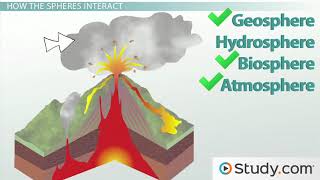
In another lesson, we learned about the basic definitions of these spheres, but the real magic happens when they interact. A worksheet typically asks students to identify these connections through real-world scenarios. Consider these examples:
- Geosphere and Hydrosphere: Water from a river (hydrosphere) erodes a canyon wall (geosphere) over millions of years.
- Atmosphere and Biosphere: Plants (biosphere) take in carbon dioxide from the air (atmosphere) to perform photosynthesis.
- Hydrosphere and Atmosphere: Water evaporates from the ocean (hydrosphere) and rises into the air (atmosphere) to form clouds.
- Biosphere and Geosphere: Decaying organic matter from dead plants (biosphere) adds nutrients to the soil (geosphere).
Enhancing the Learning Experience
Learning about Earth science doesn't have to be limited to reading a textbook. To make the concepts stick, educators often integrate multi-sensory tools. For instance, some classrooms join us on a musical journey through the spheres, using songs and rhythms to memorize the characteristics of the geosphere or atmosphere.
To further reinforce these concepts, students can engage with interactive challenges. You can get a FREE Crossword Puzzle designed to test your knowledge of terminology and sphere relationships. These puzzles help transition students from simple memorization to active recall.
Practical Application and Observation
The best way to master the material on an Earth's Spheres Worksheet is to step outside. Students are encouraged to observe the events that show how these spheres interact in their own backyard. For example, watching a rainstorm allows a student to see the atmosphere (rain) interacting with the hydrosphere (puddles) and the geosphere (soil saturation).
Downloadable Resources for Educators and Students
For those looking to implement these lessons in a classroom or home-school setting, having structured materials is key. A comprehensive activity bundle provides the necessary scaffolding for students to move from basic identification to complex analysis.
Download the Printable Activity Bundle here to access a variety of worksheets, diagrams, and assessment tools that cover the four spheres in detail.
Conclusion
The Earth is not a collection of isolated parts, but a living, breathing system of interdependence. By using a structured Earth's Spheres Worksheet