Mastering Basic Math with Double Facts Worksheets
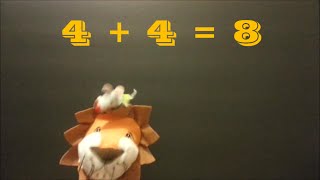
Building a strong foundation in mathematics begins with number sense and fluency. One of the most effective stepping stones for early learners is mastering double facts. Double facts occur when a number is added to itself, such as 2 + 2 = 4 or 5 + 5 = 10. Because these patterns are predictable and symmetrical, they serve as an essential mental anchor for students transitioning from counting on their fingers to rapid mental recall.
Whether you are teaching in the classroom or at home, utilizing double facts worksheets provides the structured practice students need to internalize these patterns. When children memorize these core equations, they gain the confidence to tackle more complex addition and subtraction problems.
Why Double Facts are Important for Early Learners
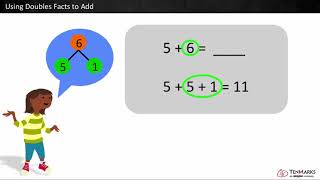
Double facts are more than just simple addition; they are "benchmark" numbers. Once a student knows that 6 + 6 = 12, they can easily solve "near doubles" like 6 + 7. By recognizing that 6 + 7 is simply one more than 6 + 6, the student can derive the answer of 13 without having to count from one. This strategy reduces cognitive load and increases calculation speed.
Students learn to use these facts to:
- Improve overall mental math agility.
- Develop a deeper understanding of number relationships.
- Bridge the gap between concrete counting and abstract arithmetic.
- Build a foundation for multiplication (as doubling is the basis for the 2s times table).
Effective Ways to Use Double Facts Worksheets
To get the most out of your worksheets, it is helpful to vary the way students interact with the material. Repetition is key, but engagement keeps students motivated.
1. Visual Matching Exercises
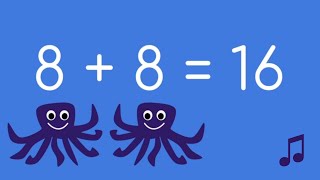
Begin with worksheets that pair equations with visual representations. For example, a worksheet might show two groups of three apples next to the equation 3 + 3 = 6. This helps students visualize the concept of "doubling" before they move toward pure memorization.
2. Timed Fluency Drills
Once a student understands the concept, introduce timed worksheets. These drills encourage students to move past counting and toward instant recall. Start with a generous time limit and gradually shorten it as the student becomes more proficient.
3. Fill-in-the-Blank Challenges
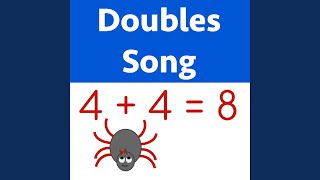
Challenge students by removing different parts of the equation. Instead of providing 4 + 4 = __, try providing 4 + __ = 8. This forces the student to think inversely, which is a critical skill for learning subtraction.
Integrating Multi-Sensory Learning
While worksheets are excellent for assessment and individual practice, combining them with auditory and kinesthetic activities can accelerate learning. Many 1st grade teachers find that music helps students memorize facts more effectively.
Integrating a Doubles Addition Facts Song for kids can turn a rote memorization task into an engaging activity. When students sing the facts, they engage different parts of the brain, making the information easier to retrieve during a test or a worksheet exercise. For educators looking to expand their toolkit, exploring diverse teaching resources—such as those offered by Numberock—can provide a blend of music, animation, and digital practice that complements traditional paper-based worksheets.
Tips for Parents and Educators
If a student is struggling with double facts, consider these supportive strategies:
- Use Manipulatives: Use LEGO bricks, buttons, or coins. Have the student create a tower of four, then build an identical tower next to it to see the total.
- Daily Flashcards: Spend five minutes a day reviewing double facts before dinner or during a commute.
- Real-World Application: Point out doubles in daily life, such as the number of wheels on two bicycles or the number of eyes on two people.
Conclusion
Double facts worksheets are an indispensable tool for any early childhood math