Mastering the Dividing Decimals Anchor Chart
Welcome to a comprehensive guide on creating and using a dividing decimals anchor chart. For fifth-grade students and educators, moving from whole number division to decimal division can feel like a significant leap. An anchor chart serves as a permanent visual reminder of the steps required to solve these problems accurately, reducing anxiety and increasing independence in the classroom.
Whether you are following a curriculum that correlates to page 40 of the Spectrum Math Workbook, Grade 5, or exploring independent learning solutions, having a structured visual aid is essential for mastering this mathematical concept.
Why Use an Anchor Chart for Dividing Decimals?
Mathematics is often sequential. If a student forgets one small step—such as moving the decimal point—the entire calculation will be incorrect. A dividing decimals anchor chart acts as a "cheat sheet" that students can reference in real-time. It transforms an abstract process into a concrete series of actions.
Effective anchor charts typically include:
- Clear headings that define the goal of the lesson.
- Step-by-step instructions written in simple language.
- Color-coded examples to highlight the movement of the decimal point.
- Common pitfalls to avoid, such as forgetting to bring the decimal straight up into the quotient.
Step-by-Step Guide to Dividing Decimals
When designing your anchor chart, it is helpful to break the process down into manageable stages. Most educators focus on two primary scenarios: dividing a decimal by a whole number and dividing a decimal by another decimal.
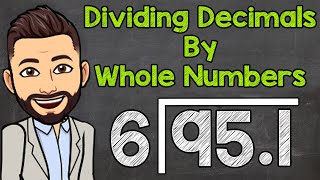
Scenario 1: Decimal Divided by a Whole Number
This is the simplest form of decimal division. The primary rule here is alignment.
- Place the decimal: Move the decimal point from the dividend directly up to the quotient (the answer line).
- Divide as usual: Treat the numbers as if they were whole numbers.
- Check for remainders: If there is a remainder, add a zero to the end of the dividend and continue dividing until the decimal terminates or repeats.
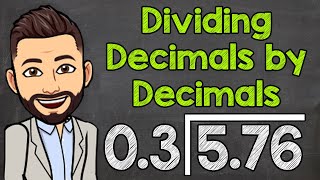
Scenario 2: Decimal Divided by a Decimal
When the divisor is also a decimal, students must first "clear" the decimal from the divisor to make the problem manageable.
- Shift the divisor: Move the decimal point in the divisor to the right until it becomes a whole number.
- Shift the dividend: Move the decimal point in the dividend the exact same number of places to the right.
- Align and divide: Move the new decimal point up to the quotient and divide as you would with a whole number.
Exploring Alternative Methods: The Box Method
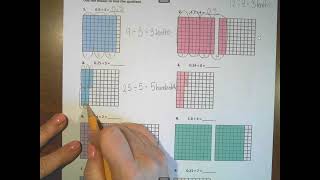
While traditional long division is the standard, some students struggle with the spatial organization of that method. A step-by-step guide on how to use the box method (also known as the area model) can be a powerful addition to your anchor chart.
The box method allows students to decompose the dividend into friendlier numbers. By breaking the number into parts that are easily divisible by the divisor, students can find the partial quotients and add them together at the end. This method is particularly useful for visual learners who struggle with the "bring down" phase of traditional long division.
Tips for Classroom Implementation
To make the most of your dividing decimals anchor chart, consider these engagement strategies:
- Interactive Elements: Use sticky notes or movable decimal points on the chart so students can practice the "shift" physically.
- Color Coding: Use red for the divisor and blue for the dividend to help students keep track of which number is being manipulated.
- Peer Teaching: Encourage students to explain the chart to a partner, reinforcing their own understanding of the process.
For those looking for more engaging learning solutions and visual demonstrations