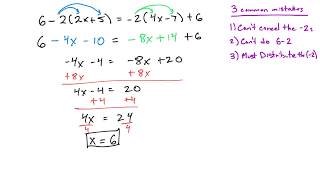
Understanding the Distributive Property With Negative Numbers
The distributive property is a cornerstone of algebra that allows us to simplify expressions and solve equations efficiently. When negative numbers are involved, the same rule applies, but extra attention to sign changes is essential. This article explains the concept, demonstrates step‑by‑step examples, and highlights shortcuts that grade‑7 students can master in less than 60 seconds.
What Is the Distributive Property?
In its basic form, the distributive property states:
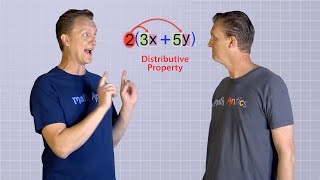
a · (b + c) = a·b + a·c
The property works equally well with subtraction because subtraction is the addition of a negative number:
a · (b − c) = a·b − a·c
When a or the terms inside the parentheses are negative, the signs of the products change accordingly.
Why Negative Numbers Matter
Negative numbers flip the sign of the product. Remember these two simple rules:
- If one factor is negative and the other is positive, the product is negative.
- If both factors are negative, the product is positive.
Applying these rules inside the distributive framework prevents common mistakes such as forgetting to change a sign after distribution.
Formal Method for Distributing With Negative Numbers
This video explains the formal method and shortcut method for distributing. The formal method follows a systematic approach:
- Identify the factor outside the parentheses.
- Multiply this factor by each term inside the parentheses, one at a time.
- Write each product as a separate term.
- Combine like terms if possible.
For example, consider −3 · (4 − 5x):
- Multiply −3 by 4 → −12.
- Multiply −3 by −5x → +15x (negative times negative is positive).
- Write the result: −12 + 15x.
The final expression shows how the negative outside the parentheses changes the sign of each inner term.
Shortcut Method: Using Sign Charts
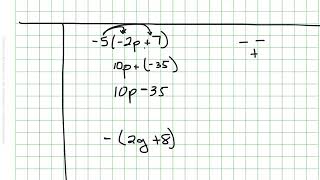
Many students find it faster to use a sign chart. In less than 60 seconds, learn how to use the chart to keep track of positive and negative signs:
- Write the outside factor at the top of the chart.
- Place each term from the parentheses underneath.
- Draw a line and write the product of the signs directly below each term.
Applying the shortcut to