Introduction to Cylinder Nets
A cylinder net is a flat, two‑dimensional pattern that can be cut out, folded, and glued to create a three‑dimensional cylinder. In geometry classrooms, nets help students move from abstract formulas to concrete visual models. By working with a cylinder net, learners can see how the curved surface and the two circular bases fit together, which deepens their understanding of surface area, volume, and the relationship between linear measurements and area.What Is a Cylinder Net?
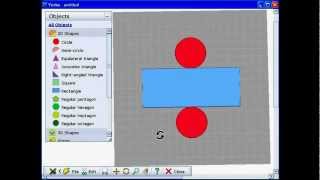
A cylinder consists of three parts: two congruent circular bases and a curved lateral surface. When these parts are “unfolded” onto a plane, the result is a cylinder net. The net typically shows:- Two identical circles that become the top and bottom of the cylinder.
- A rectangle whose length equals the circumference of the circles and whose height equals the cylinder’s height.
How to Make a Cylinder Net: Step‑by‑Step Guide
- Gather materials. You will need a sheet of graph paper or plain paper, a pencil, a ruler, a compass (or any circular object to trace), and scissors.
- Determine the dimensions. Measure the radius (r) of the cylinder’s base and its height (h). The circumference (C) is C = 2πr.
- Draw the circles. Using the compass, draw two circles of radius r on the paper. Space them apart so that a rectangle can be placed between them without overlapping.
- Draw the rectangle. With the ruler, draw a rectangle whose height is h and whose length is exactly C. Align one long side of the rectangle with the bottom edge of the lower circle and the opposite long side with the top edge of the upper circle.
- Label the parts. Write “base” near each circle and “lateral surface” on the rectangle. This helps when folding later.
- Cut out the net. Carefully cut around the outer perimeter, keeping the three pieces connected at the edges where they will be joined.
- Fold and glue. Fold the rectangle into a tube, bring the two circular edges together, and glue the seam. Then attach each circle to the open ends of the tube.
Cylinder Net Visualization
Visual learners benefit from seeing the net in action. Many textbooks include a diagram similar to the description above, but interactive tools make the process even clearer. Online geometry platforms often provide a drag‑and‑drop interface where you can adjust the radius and height, watch the rectangle stretch or shrink, and instantly see the resulting 3‑D model. Such visualizations reinforce the idea that the rectangle’s length is always the circumference of the circles, no matter how large or small the cylinder becomes.Mathematical Applications of the Cylinder Net
The net is not just a craft project; it is a bridge to several key calculations.
- Surface area. The total surface area (SA) of a cylinder equals the area of the two bases plus the area of the lateral rectangle:
SA = 2πr² + 2πrh. By measuring the rectangle’s length (2πr) and height (h) on the net, students can compute the lateral area directly. - Volume. While the net itself does not show volume, it helps students remember that the volume (V) depends on the base area and the height:
V = πr²h. The radius and height are already visible on the net, making it easier to substitute values.
Classroom Resources and Further Learning
For students who want additional video explanations, the Meritnation website offers free tutorials on cylinder nets and related geometry topics. The CBSE Class 5 Mathematics online series includes a short clip that walks through the drawing process step by step.
For a more structured approach, the Krista King Geometry Course provides a dedicated module on nets of solids. The video lesson titled “How to Draw a Cylinder Net” demonstrates the same steps outlined above, but with animated overlays that highlight the relationship between circumference and rectangle length.
Common Mistakes to Avoid
- Using the diameter instead of the radius. Remember that the circumference uses the radius (C = 2πr). If you mistakenly use the diameter, the rectangle will be too short, and the tube will not close properly.
- Incorrect rectangle height. The rectangle’s height must match the cylinder’s actual height. A taller rectangle creates a longer cylinder, while a shorter one produces a squat shape.
- Misaligned edges. When gluing, ensure the rectangle’s ends meet exactly at the same point on each circle. Any offset will cause a gap or overlap.
Extending the Idea: Nets of Other Solids
Once students master the cylinder net, they can explore nets of other three‑dimensional figures such as cones, pyramids, and prisms. Each solid has a characteristic pattern:- Cone. A circular base plus a sector of a circle that becomes the lateral surface.
- Rectangular prism. Six rectangles that fold into a box.
- Pyramid. A polygonal base and triangular faces that meet at a point.


![[GRADE 9] Net of a Cylinder](https://i.ytimg.com/vi/xmJZige4PbY/mqdefault.jpg)