Understanding the Congo and DRC Difference
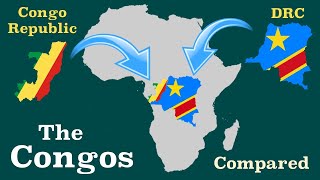
The names “Congo” and “DRC” often appear together in news headlines, travel guides, and history books, yet many people are unsure how the two countries differ. Although they share a river, a colonial past, and a similar‑sounding name, the Republic of the Congo and the Democratic Republic of the Congo are distinct nations with separate governments, economies, and cultural identities.
Geographic Overview
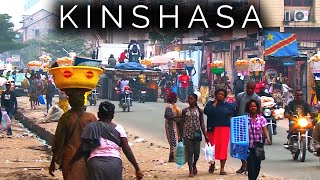
Both countries lie in Central Africa and are bisected by the Congo River, the second‑longest river in Africa. The Republic of the Congo, sometimes called Congo‑Brazzaville, occupies a relatively small area of about 342,000 km². Its capital, Brazzaville, sits directly across the river from Kinshasa, the capital of the Democratic Republic of the Congo (DRC), also known as Congo‑Kinshasa. The DRC is the second‑largest country on the continent, covering roughly 2.34 million km², and stretches from the Atlantic coast deep into the interior of Africa.
- Border length: The two nations share a short border of about 80 km along the river.
- Time zones: Both use Central Africa Time (UTC+1), which simplifies cross‑border travel.
- Climate: Brazzaville experiences a tropical wet‑dry climate, while the DRC’s vast size includes equatorial rainforests, savannas, and highland regions.
Historical Roots
The modern distinction dates back to the late 19th century “Scramble for Africa.”
- Belgian Congo: The area now known as the DRC was claimed by King Leopold II of Belgium in 1885, becoming the personal property of the Belgian monarch. After decades of exploitation, it became the Belgian Congo, gaining independence as the Republic of the Congo (Léopoldville) in 1960.
- French Congo: The smaller western neighbor was a French protectorate, later part of French Equatorial Africa. It achieved independence as the Republic of the Congo (Brazzaville) also in 1960.
Both countries initially chose the name “Republic of the Congo,” leading to confusion. To differentiate, the larger state added “Democratic” in 1964, becoming the Democratic Republic of the Congo, while the smaller state retained its capital’s name as a nickname.
Political Systems
Today, the two nations operate under different constitutional frameworks.
- Republic of the Congo (Congo‑Brazzaville): A presidential republic with a multi‑party system. The president holds executive power, while a unicameral parliament handles legislation.
- Democratic Republic of the Congo (DRC): Also a presidential republic, but with a more complex power-sharing arrangement. The DRC’s constitution provides