What is Confrontational Naming?
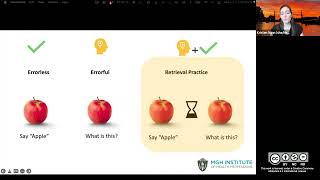
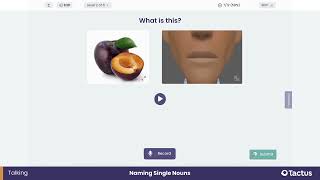
Confrontational naming is a neuropsychological assessment technique used to evaluate an individual’s ability to retrieve and produce the names of visually presented items. It’s a core component of language assessments, particularly when investigating potential naming deficits stemming from neurological conditions such as aphasia, dementia, or traumatic brain injury. The core principle involves showing a stimulus (picture or object) and asking the patient to “What is this?” or similar phrasing.
The Process of Confrontational Naming
The assessment typically involves presenting a standardized set of pictures or objects. These items are carefully selected to vary in familiarity, complexity, and frequency of use. The examiner observes not only whether the patient correctly names the item, but also how they attempt to name it. This includes noting:
- Accuracy: Does the patient provide the correct name?
- Latency: How long does it take the patient to respond?
- Circumlocution: Does the patient talk *around* the item, describing its function or characteristics, without producing the target name?
- Semantic Errors: Does the patient produce a word from a related category (e.g., saying "dog" for "cat")?
- Phonemic Errors: Does the patient produce a word that sounds similar but is incorrect (e.g., saying "tape" for "cape")?
- Neologisms: Does the patient create a new, nonsensical word?
Why is Confrontational Naming Important?
Confrontational naming provides valuable insights into several aspects of language processing. It taps into multiple cognitive domains, including:
- Lexical Access: The ability to retrieve words from long-term memory.
- Semantic Processing: Understanding the meaning of objects and concepts.
- Phonological Encoding: Transforming semantic information into the sounds of speech.
- Motor Planning & Programming: Coordinating the muscles involved in speech production.
Therefore, difficulties with confrontational naming can indicate impairments in any of these areas. It helps clinicians pinpoint the specific nature of a language disorder and tailor treatment accordingly.
Commonly Used Assessments
Several standardized tests utilize confrontational naming as a key component. Some examples include:
- Boston Naming Test (BNT): The 9626 Boston Naming Test is a widely used assessment that presents 60 pictures of varying difficulty. It is often used to identify and classify anomia (word-finding difficulties).
- Expressive Naming Test (ENT): This assessment focuses specifically on expressive naming abilities.
- Controlled Oral Word Association Test (COWAT): While primarily a measure of verbal fluency, COWAT can also provide indirect information about naming abilities.
The choice of assessment depends on the specific clinical question and the patient’s cognitive abilities.
Confrontational Naming & Aphasia
Confrontational naming is particularly crucial in the assessment and treatment of aphasia, a language disorder often resulting from stroke. Different types of aphasia can manifest in distinct naming patterns. For example:
- Anomic Aphasia: Characterized by difficulty finding words, particularly nouns. Patients may exhibit frequent pauses, circumlocution, and semantic errors.
- Wernicke's Aphasia: Often involves fluent but nonsensical speech, including paraphasias (phonemic and semantic errors) during naming tasks.
- Broca's Aphasia: May present with effortful speech and impaired naming, often