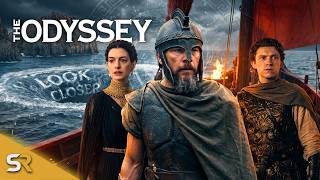
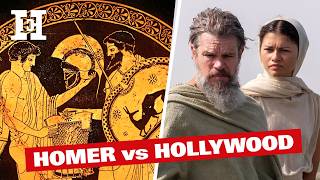
Christopher Nolan's The Odyssey Trailer Sparks Debate Over Historical Inaccuracies
The cinematic world is buzzing following the release of the first teaser for Christopher Nolan's latest project, The Odyssey. Known for his obsession with time, structural complexity, and practical effects, Nolan’s foray into Homeric epic poetry has immediately captured the public's imagination. However, alongside the anticipation, a heated debate has emerged among historians, classicists, and cinephiles regarding the historical and mythological accuracy of the adaptation.
The Visual Spectacle vs. Historical Authenticity
From the first few frames of the trailer, it is evident that Christopher Nolan is applying his signature large-scale vision to the ancient Mediterranean. The trailer showcases sweeping vistas of the Aegean Sea and meticulously crafted ancient cities. While the production design is visually stunning, eagle-eyed viewers and scholars have pointed out several discrepancies between the imagery and the archaeological record of the Bronze Age.
Critics argue that the armor and weaponry displayed in the trailer appear to be a blend of different eras, mixing Mycenaean elements with later Hellenistic styles. While Nolan is praised for avoiding excessive CGI, the "stylized realism" he employs has led some to question whether the film prioritizes aesthetic grandeur over factual precision.
Core Points of Contention in the Trailer
The debate over historical inaccuracies generally falls into three main categories:
- Material Culture: The architecture shown in the teaser features stone structures that some experts claim are too advanced for the period in which the events of The Odyssey are set.
- Chronological Blending: There are suggestions that the costumes reflect a "Hollywood version" of Ancient Greece rather than the specific cultural markers of the 12th century BCE.
- Mythological Interpretation: The trailer hints at a non-linear narrative—a staple of Nolan's work—which some fear may distort the sequential journey of Odysseus in a way that contradicts the source material's thematic progression.
Nolan's Approach to Adaptation
Christopher Nolan has rarely claimed to be a strict documentarian. In previous works like Oppenheimer or Dunkirk, he has balanced rigorous research with dramatic license to enhance the emotional impact of the story. In the case of The Odyssey, it is likely that Nolan is treating the poem not as a historical textbook, but as a psychological study of homecoming and survival.
Supporters of the director argue that The Odyssey itself is a work of mythology and oral tradition, not a factual archive. Therefore, applying strict historical scrutiny to a story involving cyclopes, sirens, and divine intervention may be counterproductive. The goal of the film appears to be the exploration of the human experience of the journey rather than a precise reconstruction of Bronze Age Greece.
The Impact of Fan Reactions and Scholar Critique
The digital age has amplified these discussions. Social media platforms are currently flooded with "breakdown" videos and threads analyzing every frame of the trailer. This level of scrutiny is common for high-profile releases, but it creates a tension between the expectations of academic purists and the general movie-going public.
Interestingly, this debate often serves as free marketing, driving deeper engagement with the film before it even hits theaters. By sparking a conversation about history and myth, the trailer has ensured that audiences will enter the cinema with a critical eye and a heightened interest in the narrative's execution.
Conclusion: Artistry Over Accuracy?
As the release date approaches, the central question remains: does historical inaccuracy diminish the quality of a cinematic epic? For most, the allure of a Christopher Nolan film lies in the intellectual challenge and the sensory experience. Whether the armor is period-accurate or the architecture is anachronistic, the focus remains on how Nolan will manipulate the concept of the "long journey" to tell a timeless story.
Ultimately, The Odyssey is expected to be a meditation on memory and loss. If the film succeeds in capturing the spirit of Homer's epic, the debate over