The Evolution of Christopher Nolan Films and the Future of Cinema
Christopher Nolan has established himself as one of the most influential directors in modern cinema. Known for his obsession with time, memory, and the physical nature of film, Nolan blends high-concept intellectual puzzles with massive spectacle. His commitment to the theatrical experience has helped sustain the relevance of the big screen in an era of streaming dominance.
The Early Foundations: From Following to Global Recognition
Before the massive budgets of the Dark Knight trilogy or the cosmic scale of Interstellar, Nolan began his journey with a modest, independent approach. His first feature, Following, demonstrated his early fascination with non-linear storytelling and structural manipulation. By utilizing a tight budget and a noir-inspired plot, Nolan proved that complex narratives could be executed effectively without excessive resources.
This early experimentation paved the way for his later works, where he would refine the "puzzle film" format. Whether it is the layered dream states of Inception or the temporal inversion of Tenet, Nolan consistently challenges the audience to engage actively with the screen, treating cinema as a cognitive exercise rather than passive entertainment.
The Technical Mastery of Large Format Cinema
One of the defining characteristics of Christopher Nolan films is his insistence on analog technology. In a world where digital cinematography is the standard, Nolan remains a staunch advocate for IMAX and 70mm film. This choice is not merely nostalgic; it is a strategic decision to provide the highest possible resolution and immersion for the viewer.
- Scale: Using IMAX cameras allows for an expansive field of view that makes environments feel tangible.
- Texture: The organic grain of film provides a depth and richness that digital sensors often struggle to replicate.
- Practicality: Nolan is famous for minimizing CGI, opting instead for practical effects, such as rotating sets or real explosions, to maintain a sense of grounded reality.
Thematic Constants in Nolan's Body of Work
Across his filmography, several recurring themes emerge that define the "Nolan style." These themes often intersect with the physics of the universe and the fragility of the human mind.
Time and Perception
Time is rarely linear in a Nolan film. From the backward-running sequences in Memento to the time dilation caused by gravity in Interstellar, he treats time as a physical dimension that can be bent, stretched, or folded. This approach forces the audience to question the reliability of memory and the permanence of the present moment.
Identity and Obsession
Nolan's protagonists are frequently driven by a singular, often destructive, obsession. Whether it is the pursuit of a criminal, the desire to return to a lost child, or the quest to uncover a hidden truth, these characters embody the struggle between logic and emotion.
Looking Ahead: The Future of the Cinematic Experience
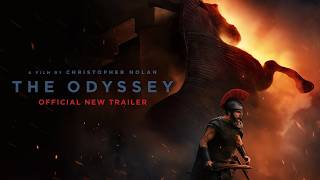
As the industry evolves, the anticipation for new projects continues to grow. Cinema enthusiasts are already looking toward future releases that promise to push the boundaries of storytelling. For those following the trajectory of epic narratives, The Odyssey is slated for theaters on 07.17.26, promising another venture into grand-scale filmmaking.
For those who wish to study the craft of cinema more deeply, resources like the Criterion Channel provide invaluable archives of world cinema that have influenced directors like Nolan. Understanding the history of the medium—from the avant-garde to the golden age of Hollywood—is essential for appreciating how Nolan synthesizes different eras of film into a modern aesthetic.
Supporting Independent Film Analysis
The appreciation of cinema extends beyond the theater. Independent critics and archivists play a vital role in preserving the dialogue surrounding film theory. Supporting creators who analyze the technical aspects of cinematography and direction ensures that the intellectual legacy of filmmakers is documented and debated.
Whether through platforms like Patreon or dedicated cinema collectives, the community's support for film analysis helps bridge the gap between the casual viewer and the cinephile.