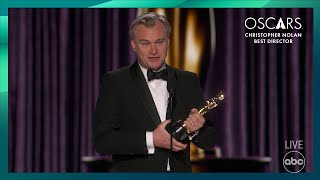
The Cinematic Vision of Christopher Nolan
Christopher Nolan has cemented his status as one of the most influential filmmakers of the 21st century. Known for his complex narrative structures, practical effects, and commitment to the theatrical experience, the British-American director has redefined the blockbuster landscape. From the gritty streets of Gotham to the vast reaches of space and the intricacies of human memory, Nolan’s filmography reflects a director who treats cinema as a puzzle to be solved and an experience to be felt.
Early Life and Career Breakthrough
Born in London, Christopher Nolan developed a passion for filmmaking at a young age. His early work, including the low-budget neo-noir Following, showcased his interest in non-linear storytelling—a hallmark that would define his later career. However, it was the 2000 film Memento that brought him international acclaim. By telling the story in reverse, Nolan challenged audiences to engage with the narrative in an entirely new way, proving that mainstream audiences were hungry for high-concept, intellectual cinema.
Following his breakthrough, Nolan transitioned into large-scale studio filmmaking. His revitalization of the Batman franchise with The Dark Knight Trilogy transformed the superhero genre. By grounding the Caped Crusader in a realistic, gritty world, Nolan proved that comic book adaptations could possess the weight and gravitas of prestige drama.
The Philosophy of the Theatrical Experience
Nolan is a staunch advocate for the theatrical experience. He often collaborates with industry icons to champion the preservation of film as a medium. Whether he is being interviewed by fellow visionaries like Denis Villeneuve, who shares a similar dedication to grand-scale storytelling, or receiving accolades from legends like Steven Spielberg, Nolan remains focused on the audience’s journey.
He famously noted, "People want to go on this journey with us, let's give them a reason to believe." This philosophy drives his commitment to practical effects over excessive CGI. By prioritizing real stunts, massive sets, and IMAX photography, Nolan creates a tactile sense of immersion that digital effects often struggle to replicate.
Mastery of Non-Linear Time
If there is one theme that threads through the career of Christopher Nolan, it is the manipulation of time. Whether it is the fragmented memories in Memento, the overlapping timelines in Dunkirk, or the gravitational time dilation in Interstellar, Nolan uses time as a narrative tool to heighten tension and explore human emotion.
Critics and peers alike often discuss his technical precision. Even directors like Angelina Jolie, who moved into directing with projects like Unbroken, have noted the importance of vision and technical mastery in modern filmmaking. Nolan’s ability to weave complicated scientific concepts into emotionally resonant stories has earned him a dedicated global following.
Signature Elements of a Nolan Film
A Christopher Nolan production is typically recognizable by several distinct hallmarks:
- Practical Filmmaking: A preference for in-camera effects, such as flipping an actual 18-wheeler in The Dark Knight or building a rotating hallway for the zero-gravity fight in Inception.
- Intellectual Depth: Themes focusing on identity, obsession, morality, and the nature of reality.
- Collaborative Consistency: Long-standing partnerships with cinematographer Hoyte van Hoytema, composer Hans Zimmer, and his wife and producing partner, Emma Thomas.
- IMAX Cinematography: The extensive use of large-format film cameras to provide maximum visual clarity and scale on the biggest screens possible.
The Impact of the Oscar-Winning Director
Nolan’s career reached a new milestone with the success of Oppenheimer, a film that solidified his status as an Oscar-winning director. The film’s success proved that a three-hour, dialogue-heavy historical drama could dominate the global box office. It served as a testament to his belief that audiences do not need to be patronized; they are capable of appreciating complex, challenging, and lengthy cinematic experiences if the craft