The Evolution of Christopher Nolan's Career
Christopher Nolan has established himself as one of the most influential filmmakers of the 21st century. Known for his mastery of non-linear storytelling, practical effects, and complex thematic explorations of time and memory, Nolan has bridged the gap between high-concept intellectual cinema and massive global blockbusters. Over a career spanning more than two decades, he has evolved from an independent filmmaker into a BFI Fellowship recipient and an internationally acclaimed director.
The Early Years: Establishing a Signature Style
The first half of Christopher Nolan's career, beginning in the mid-90s, was defined by a desire to challenge traditional narrative structures. His debut feature, Following, demonstrated his early fascination with fragmented timelines and psychological depth. This period served as a foundation for his ability to manipulate the audience's perception of time, a trait that would become his cinematic trademark.
With the release of Memento, Nolan gained widespread critical attention. The film's reverse-chronological structure mirrored the protagonist's short-term memory loss, proving that complex storytelling could be commercially viable and intellectually stimulating. This era of his career established him as a director who demanded that the audience "watch closely," treating the viewer as an active participant in solving the film's puzzle.
The Blockbuster Transition: The Dark Knight Trilogy
Nolan's career reached a new echelon when he took on the task of reimagining the Batman mythos. By grounding the superhero genre in a gritty, realistic urban environment, he shifted the trajectory of comic book cinema. The Dark Knight trilogy focused not just on action, but on the philosophical conflict between order and chaos.
The collaboration with actors like Heath Ledger and Christian Bale allowed Nolan to explore the psychology of heroism and villainy on a grand scale. This period proved that Nolan could handle massive budgets and large-scale productions without sacrificing his commitment to practical effects and thematic complexity.
Exploring High-Concept Science and Time
Following his success with superhero cinema, Nolan pivoted toward original, high-concept sci-fi epics that explored the boundaries of human existence and physics. This phase of his career is characterized by a pursuit of scientific accuracy blended with emotional resonance.
- Inception: An exploration of the subconscious and the architecture of dreams.
- Interstellar: A visually stunning journey through black holes and time dilation, focusing on the bond between a father and daughter.
- Dunkirk: A masterclass in tension and perspective, utilizing three intertwining timelines—land, sea, and air—to depict a pivotal WWII evacuation.
- Tenet: An ambitious experiment in "time inversion," pushing the limits of non-linear editing and conceptual storytelling.
The Pinnacle of Prestige: Oppenheimer
The most recent chapter of Christopher Nolan's career is marked by Oppenheimer, a biographical thriller focusing on J. Robert Oppenheimer and the creation of the atomic bomb. This film represents a culmination of Nolan's career goals: blending historical fact with intense psychological drama and breathtaking technical execution.
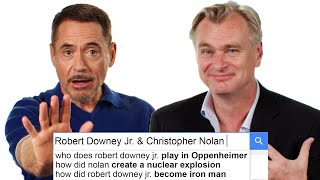
Featuring a powerhouse performance by Cillian Murphy and supporting roles from actors like Robert Downey Jr., Oppenheimer solidified Nolan's status as a director capable of handling intimate character studies as effectively as he handles galactic epics. The film's success in both critical acclaim and box office performance underscores his unique ability to draw audiences to three-hour dramas based on theoretical physics and political fallout.
Technical Legacy and Influence
Throughout his career, Christopher Nolan has remained a steadfast advocate for the theatrical experience. His preference for IMAX film and his avoidance of excessive CGI have preserved a tactile quality in his work that is increasingly rare in modern cinema. By insisting on practical stunts and physical sets, he ensures that the stakes feel real to the viewer.
From the indie roots of the 1990s to the global phenomenon of Oppenheimer, Nolan's trajectory is a testament to the power of original vision. He has successfully navigated the