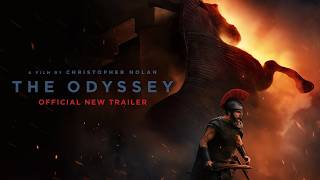
Chris Nolan Films: A Career-Defining Filmography
Christopher Nolan is the visionary behind some of the most mind-bending and commercially successful films in modern cinema. With twelve feature films to his name, he has carved out a unique space at the intersection of art-house ambition and blockbuster spectacle. From his humble beginnings with a micro-budget short to becoming one of the highest-grossing directors in history, his work continues to challenge audiences and push technical boundaries.
The Early Years: Following and Memento
Nolan's first feature film, Following (1998), was made on a shoestring budget of roughly six thousand dollars. Shot in black and white on weekends over several months, the film follows a young writer who begins following strangers through London's streets. Its tight, non-linear structure hinted at the narrative experimentation that would define his career. While it never received a wide theatrical release, Following established Nolan as a filmmaker capable of achieving extraordinary results with minimal resources.
His breakthrough came with Memento (2000), a psychological thriller told in reverse chronological order that follows a man with short-term memory loss hunting for his wife's killer. The film became a cultural phenomenon, grossing over $40 million against a budget of only $9 million. It showcased Nolan's signature obsession with subjective time, fractured identity, and narrative manipulation — themes that would recur throughout his entire filmography.
The Blockbuster Transition: Insomnia and Batman Begins
Nolan proved his versatility with Insomnia (2002), a murder mystery remake starring Al Pacino and Robin Williams set in Alaska. While not widely considered among his best work, the film demonstrated his ability to handle studio expectations without losing his authorial voice.
That voice exploded onto the mainstream stage with Batman Begins (2005), which redefined the superhero genre by grounding its source material in psychological realism and visual authenticity. Produced on a budget of approximately $150 million, the film earned over $370 million worldwide and laid the foundation for what would become one of cinema's most celebrated trilogies.
The Peak Years: The Prestige, The Dark Knight, and Inception
The Prestige (2006) returned to the independent sensibility that characterized his early work. A story about rival magicians in Victorian England, the film's intricate double-twist structure and dark exploration of obsession cemented Nolan's reputation as a filmmaker unafraid of complexity. It remains a cult favorite among fans of intellectual thrillers.
The Dark Knight (2008) is widely regarded as one of the greatest superhero films ever made. Heath Ledger's iconic performance as the Joker, combined with Nolan's practical-effects approach and IMAX cinematography, elevated the film far beyond its comic-book origins. It grossed over $1 billion worldwide and is frequently cited as a rare sequel that surpasses its predecessor in both critical acclaim and cultural impact.
Inception (2010) became Nolan's biggest commercial success at the time, earning over $836 million globally. The film's layered dreamscapes and ambiguous ending sparked widespread debate and analysis, ensuring its place in popular culture for years to come. Leonardo DiCaprio's performance and the practical construction of folding cityscapes further demonstrated Nolan's commitment to tangible filmmaking in an era increasingly dominated by digital effects.
Exploring New Territory: Interstellar, Dunkirk, and Tenet
Interstellar (2013) marked Nolan's most emotionally ambitious project to date. The story of a father traveling through a wormhole to save humanity combined hard scientific concepts with deeply personal themes about love transcending dimensions. Featuring groundbreaking visual effects informed by physicist Kip Thorne's equations, the film grossed over $677 million and earned an Academy Award for Best Visual Effects.
Dunkirk (2017) represented a radical departure from Nolan's usual narrative complexity. The wartime epic told its story through three interconnected timelines operating at different speeds — land, sea, and air — spanning varying durations. The film's immersive, dialogue-light approach prioritized sensory experience over exposition, and it ultimately grossed over $530 million worldwide.
Tenet (2020) became the most expensive film Nolan had ever made at a budget of approximately $200 million. Its central conceit of "inversion" — objects and people moving backward through time — presented an unprecedented puzzle for mainstream audiences. While reception was mixed, the film's practical stunt work and innovative sound design earned recognition and demonstrated Nolan's unwavering commitment to theatrical exhibition.
Oppenheimer and a Two-Decade Legacy
Oppenheimer (2023) brought together all of Nolan's thematic preoccupations into a towering biographical drama. The film traces the life of J. Robert Oppenheimer and the moral complexities surrounding the development of the atomic bomb. Starring Cillian Murphy in a career-defining performance, the film grossed over $950 million and won seven Academy Awards including Best Picture and Best Director. It became the highest-grossing film of Nolan's career in nominal box office terms and confirmed the BFI Fellowship recipient as a filmmaker operating at the pinnacle of the industry.
The internationally acclaimed director's two-decade career has produced work that consistently challenges audience expectations while delivering extraordinary cinematic experiences. His decision to shoot on film stock, favor practical effects, and embrace expansive theatrical runs has made him one of the last true auteurs working within the studio system. For newcomers seeking to explore his work, starting with Memento or The Dark Knight provides an accessible entry point into a body of work that rewards repeated viewing and deeper analysis.
```




![[the films of] Christopher Nolan](https://i.ytimg.com/vi/Ao9yQF5N8QI/mqdefault.jpg)