Mastering Reading Comprehension with Character Anchor Charts
In the early stages of literacy development, particularly for second graders and primary students, understanding the "who" of a story is fundamental to overall reading comprehension. A character anchor chart serves as a visual roadmap, helping students move beyond a surface-level understanding of a story to a deeper analysis of the individuals driving the plot.
Anchor charts are active learning tools. Unlike a static poster, a character anchor chart is often created collaboratively between the teacher and the students, serving as a permanent reference point that students can glance at while reading independently or working in small groups.
What is an Understanding Characters Anchor Chart?
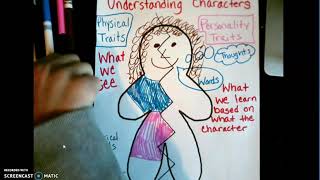
An Understanding Characters Anchor Chart is a graphic organizer displayed in the classroom that defines what a character is and provides a framework for analyzing them. While many students believe a character must be a human, a comprehensive chart expands this definition to include animals, mythical creatures, or even personified objects.
To make the chart effective, it should focus on two primary dimensions of characterization:
- External Traits: These are the observable characteristics. They include physical appearance, clothing, and age. For example, "The character has curly red hair and wears a blue cape."
- Internal Traits: These are the personality characteristics and emotions. These are often inferred through the character's thoughts, words, and actions. For example, "The character is brave because they entered the dark cave to save their friend."
Integrating Characters and Setting
Characters do not exist in a vacuum; they are shaped by where they are and when the story takes place. A characters and setting anchor chart helps students understand the relationship between the environment and the protagonist's behavior.
By linking these two elements, students can ask critical thinking questions such as:
- How does the setting influence the character's mood?
- Would the character act differently if the story took place in a different location?
- What challenges does the setting create for the character?
Connecting the "who" with the "where" allows students to predict plot developments more accurately and understand the motivations behind a character's decisions.
Teaching Strategies for the Classroom
Introducing a character anchor chart is most effective when paired with diverse instructional methods. Teachers can enhance the learning experience by integrating multimedia and sequential logic.
1. Use Animated Visuals
To capture the attention of young learners, teachers can supplement their physical charts with digital storytelling. Using tools like Powtoon allows educators to create animated videos that bring character traits to life. By visualizing a character's evolution through animation, students can better grasp the concept of character growth and change over the course of a narrative.
2. Connect to the Sequence of Events
Character analysis is inextricably linked to the plot. For students to truly understand a character, they must observe how that character reacts to the sequence of events. When students track the beginning, middle, and end of a story, they can identify if a character has undergone a transformation.
For instance, a character who starts the story as timid but ends the story as a leader has a clear character arc. Mapping this sequence alongside the anchor chart reinforces the idea that experiences shape personality.
Tips for Creating Your Own Character Anchor Chart
If you are designing a chart for your classroom, consider these best practices to ensure it remains a useful resource throughout the school year:
- Use Color Coding: Use one color for external traits (e.g., blue) and another for internal traits (e.g., green) to help students categorize information quickly.
- Include Sentence Starters: Provide prompts such as "I know the character is ___ because the text says ___." This encourages students to use evidence from the story.
- Leave Room for Examples: Leave a blank section of the chart where you can stick Post-it notes